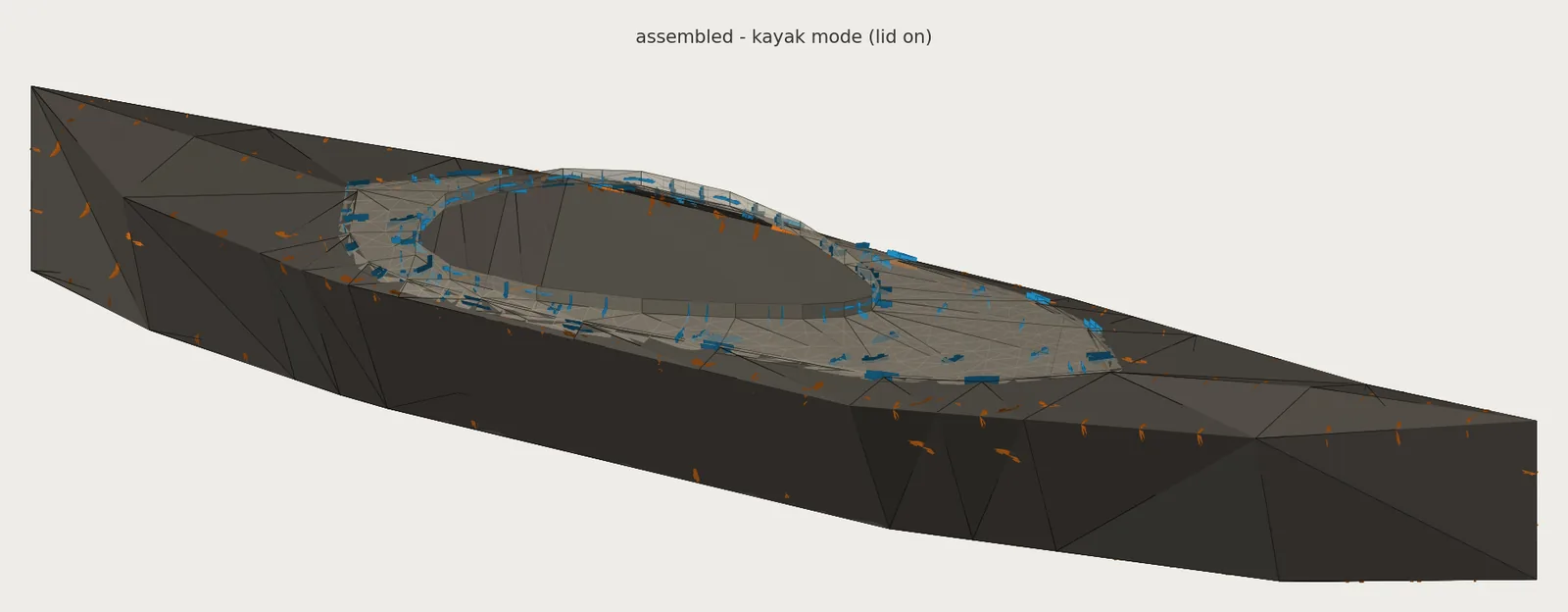
A CAD render of the assembled kayak with a translucent deck showing hundreds of small blue brackets and orange ribs inside

Composite hull designDrawing 31 of 31

Basalt fiber
kayak

A sea kayak made of 210 flat basalt panels that lock together with brackets cut from the same sheet, so the boat is basically its own jig. Right now it's a solid model and twelve sheets of cut files, and none of it has actually been cut yet.

Sheet 02 of 10/Origin

Where it started, on paper

The only physical thing this project has produced is a pencil sketch: plan view, the cockpit opening marked in red, and a little section sketched in the corner.
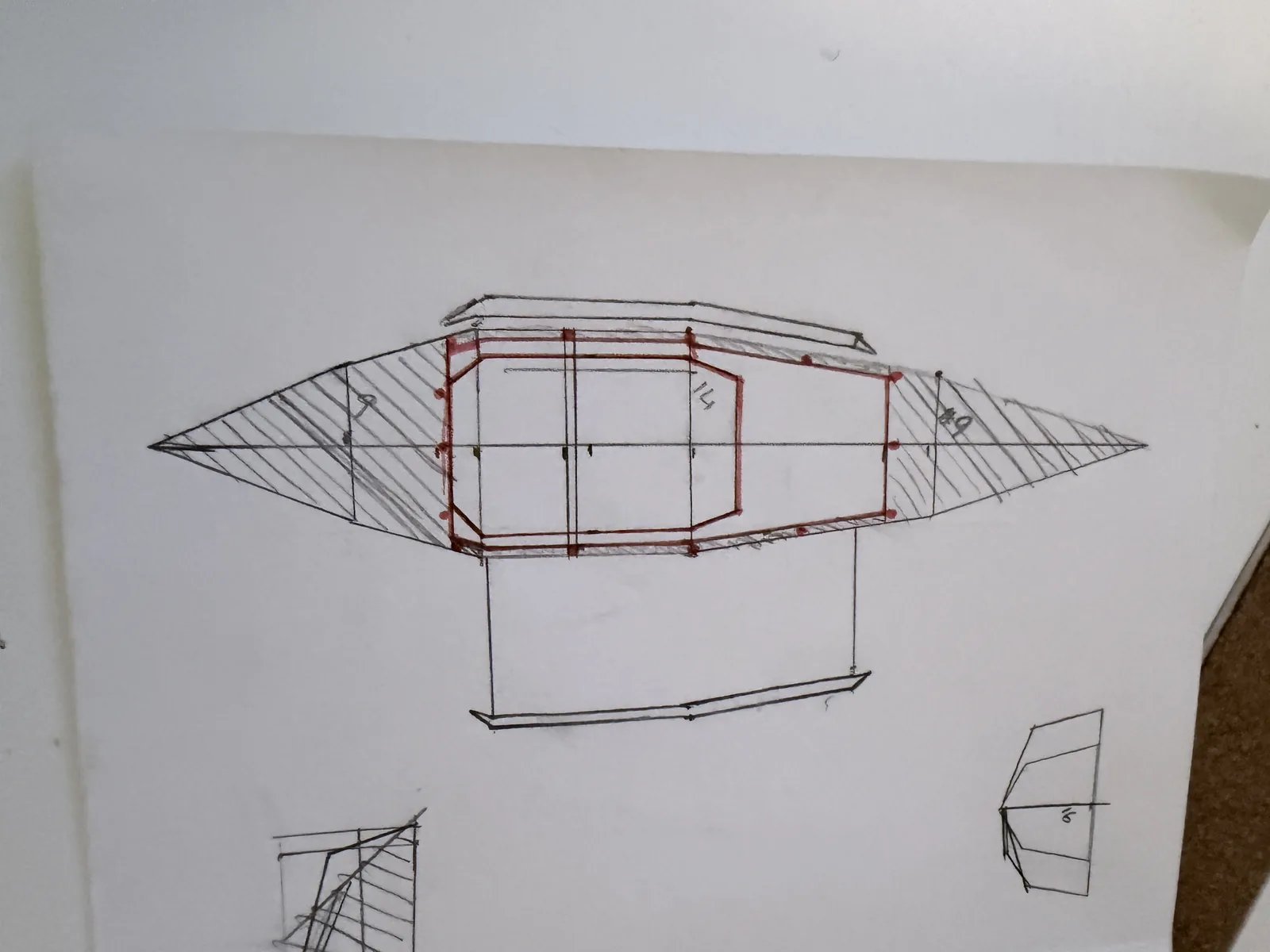
A hand drawing on white paper of a kayak in plan view, hatched at bow and stern, with a red outline marking the deck opening
PL 02Where it started, on paper. The plan view, the cockpit opening pencilled in red, and a section sketched in the corner.

Sheet 03 of 10/The hull

A hull with no curve in it

The hull is 210 flat panels with two hard chines a side, so there's no curved surface anywhere that would need a mold.
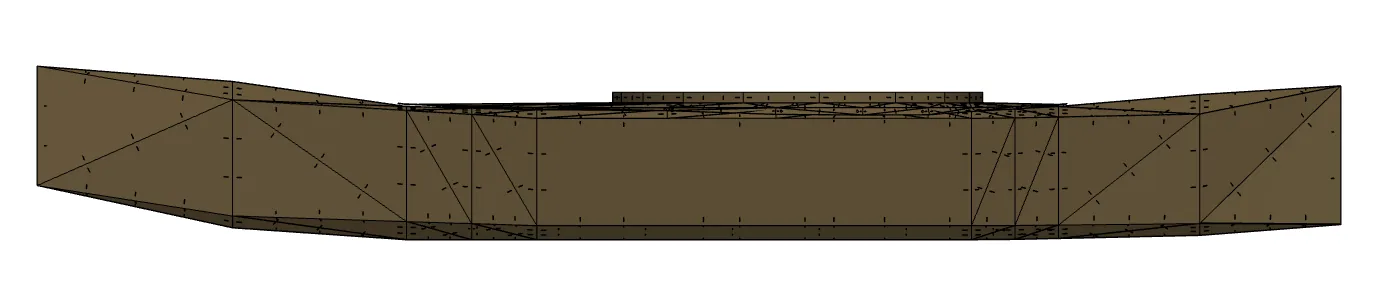
A side elevation render of the untextured kayak hull showing panel seams as straight lines
PL 04Profile, skin only. Low, flat sheer and a shallow rocker, because a flat panel cannot be coaxed into a curve.
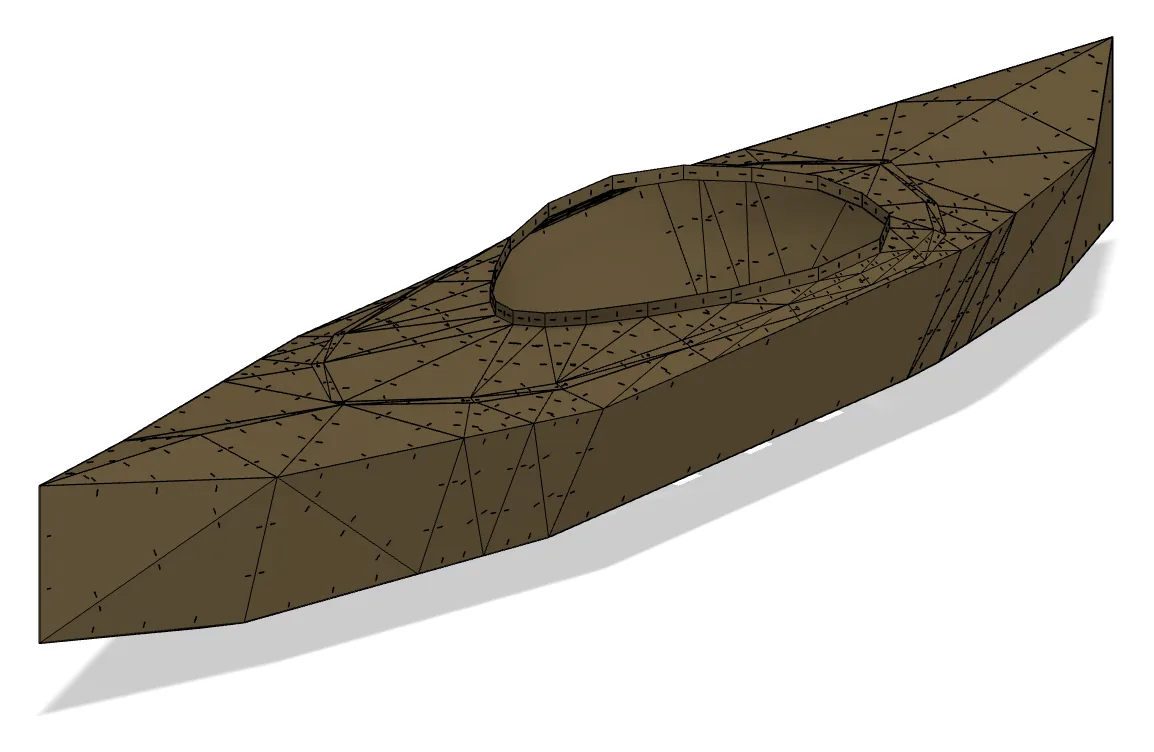
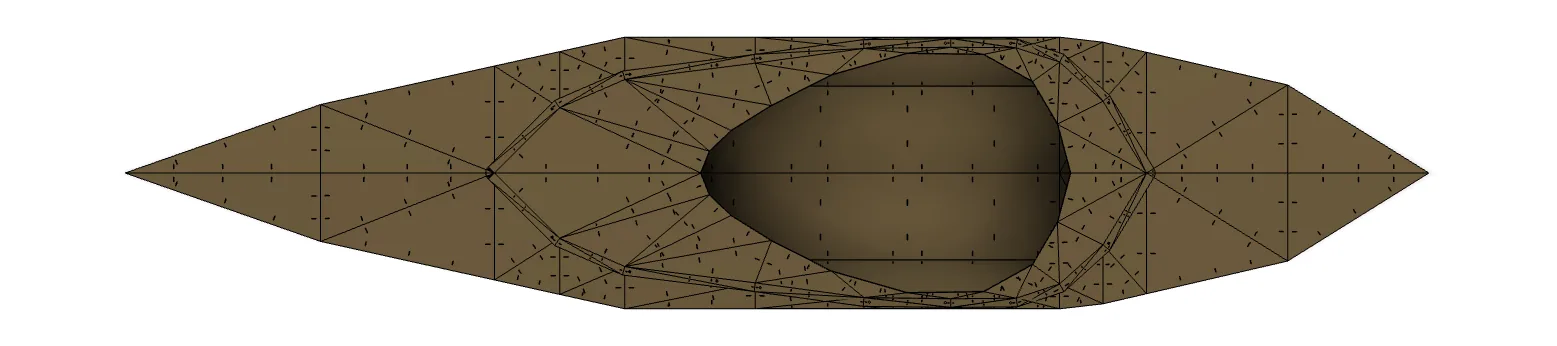
A top-down render of the untextured kayak showing the faceted deck and the oval cockpit opening
PL 05Plan, skin only. The waterline is a chain of straight segments, and the cockpit sits aft of amidships.
A three-quarter render of the untextured kayak hull showing the hard chine running the length of the boat
PL 06Three quarters ahead, skin only. Two chines a side, so the hull is a five-panel section rather than a curve.
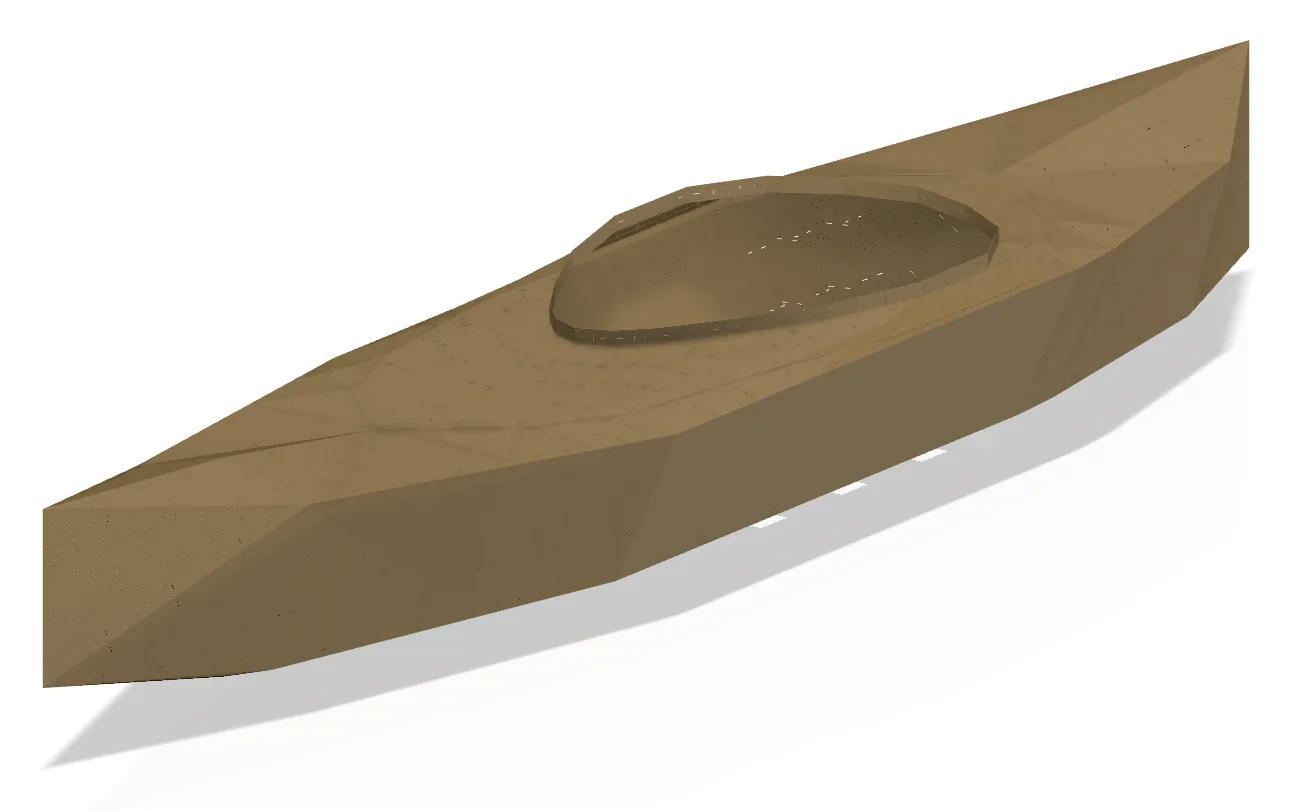
A render of a hard-chined sea kayak in olive-gold basalt laminate, seen from three quarters ahead
PL 03The same boat, skinned in basalt. Faceted because every panel is flat, and every facet edge is a bonded seam.

Sheet 04 of 10/The bracket

The joint that jigs itself

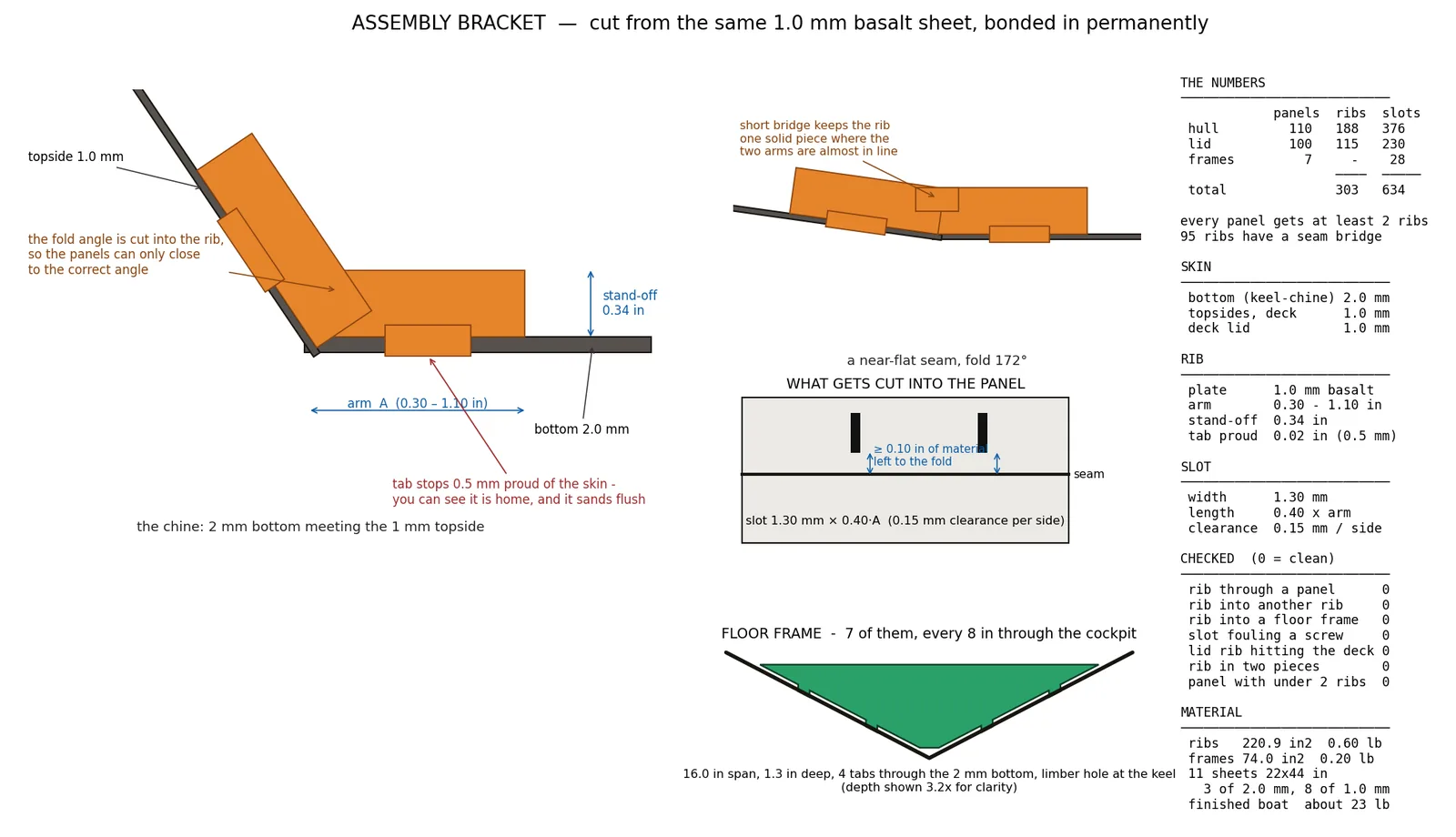
Every seam is closed by a flat bracket cut from the same sheet, with tabs that push through slots in the panel so the seam can only close to one angle.

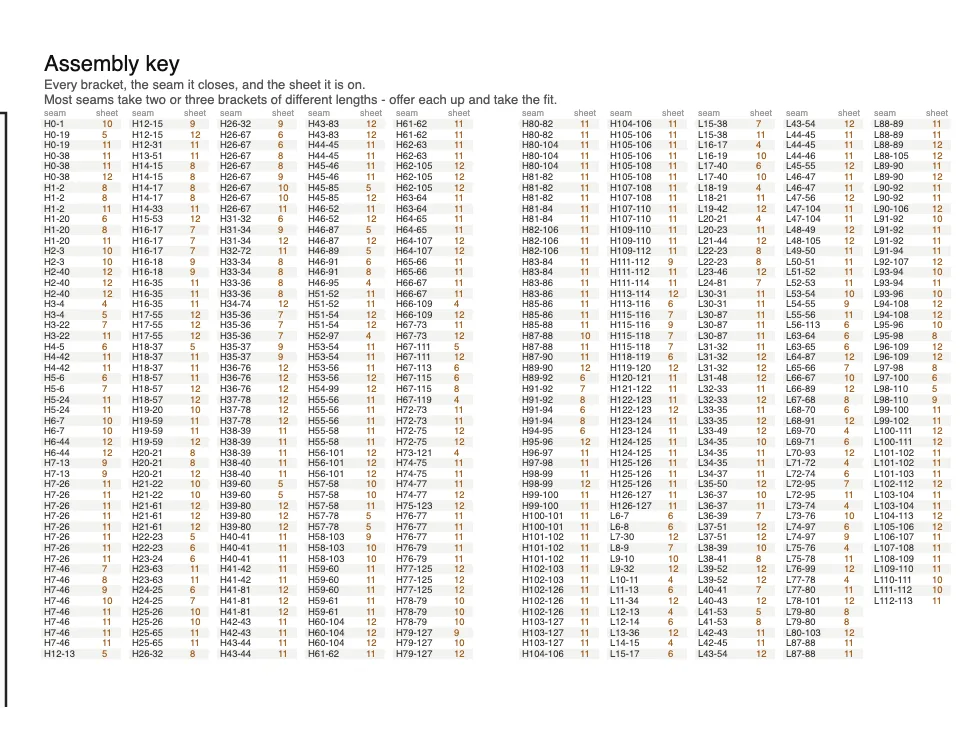
Five hundred and five of them close all 210 panels, and each one is named for the seam it closes, so a bracket found on the floor has exactly one home.
An annotated engineering figure of the assembly bracket showing the chine joint, the slot cut into the panel, a floor frame, and a table of dimensions
PL 07The bracket, drawn to its own dimensions. A tab through a slot, an arm cut to the seam angle, and a stand-off that holds the fold open.

Sheet 05 of 10/Floor frames

What holds the bottom up

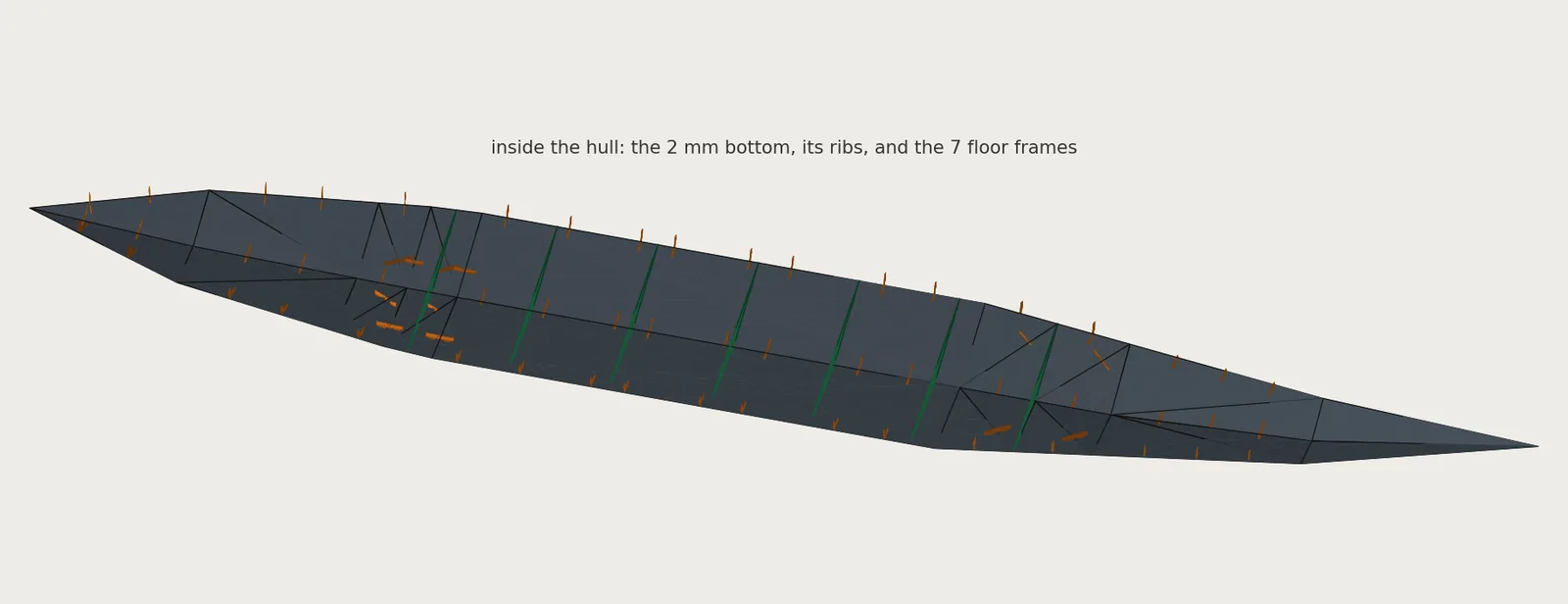
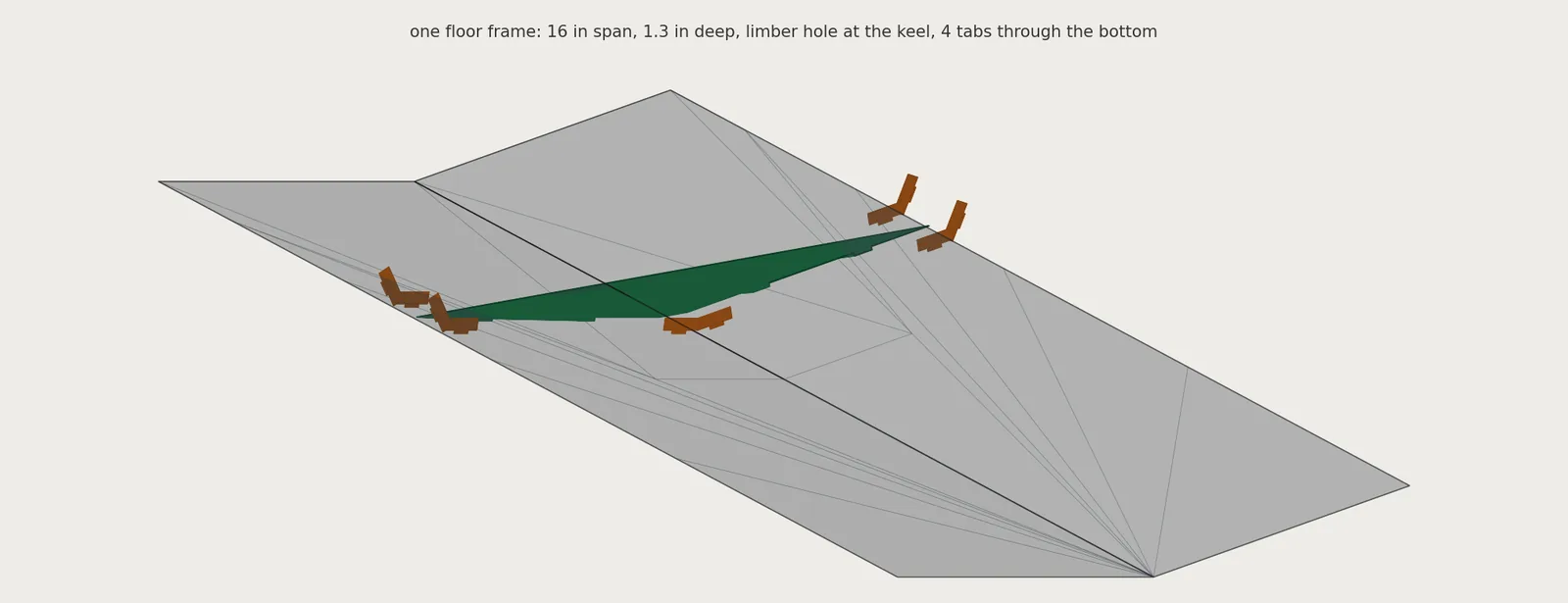
Seven floor frames sit under the cockpit, one every 8 inches, so the bottom panel is never unsupported for long.
A CAD render looking into the open kayak hull, with small orange ribs standing up from the bottom and seven green transverse frames
PL 08Inside the bare hull. The 2 mm bottom, its ribs standing proud in orange, and the seven floor frames in green.
A CAD render of a single green triangular floor frame seated between two grey hull bottom panels, held by four orange tabs
PL 09One floor frame, shown alone. A shallow vee spanning 16 in, tabbed through the bottom, with a limber hole at the keel.

Sheet 06 of 10/Skin

How thick the skin has to be

The bottom panel is 2 mm basalt because 1 mm doesn't have the strength to be sat on. Everything else on the boat stays at 1 mm.
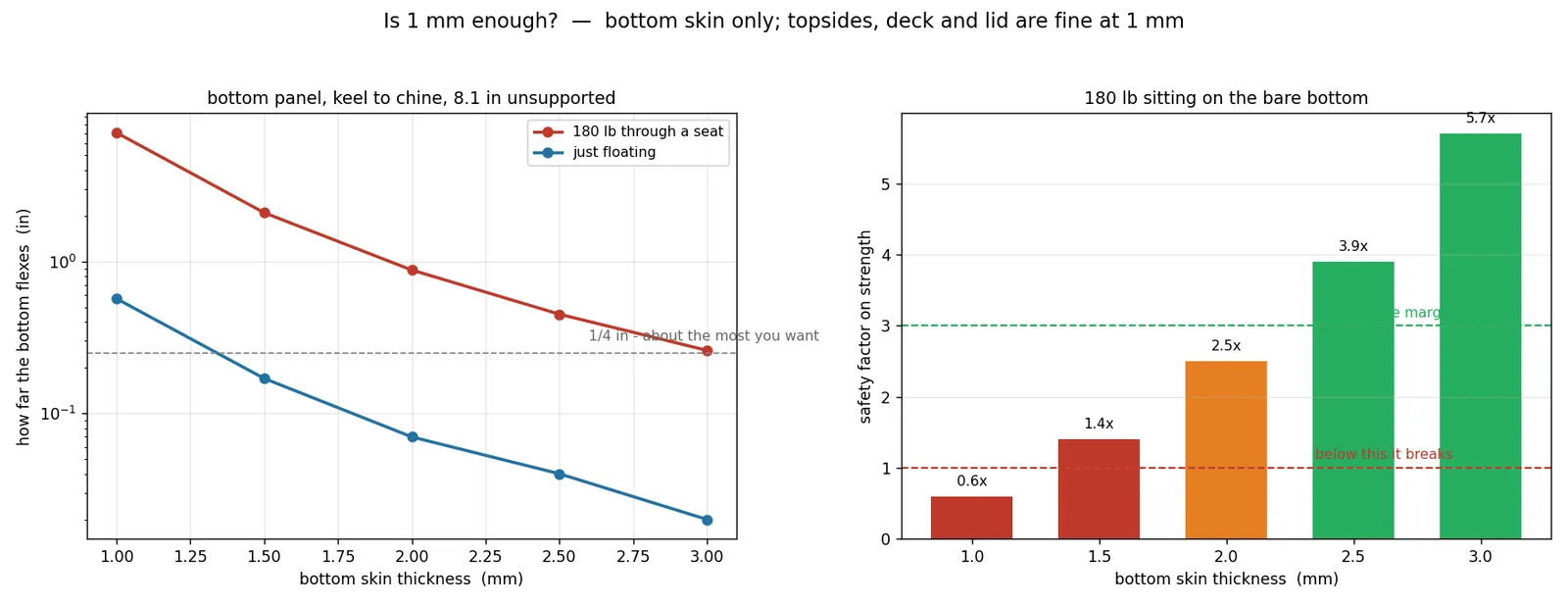
Two charts: a log plot of bottom panel deflection against skin thickness, and a bar chart of safety factor from 0.6x at 1 mm to 5.7x at 3 mm
PL 10Why the bottom is 2 mm and nothing else is. Deflection on the left, margin on the right, both against skin thickness.

Sheet 07 of 10/Cut files

Twelve sheets, 722 parts

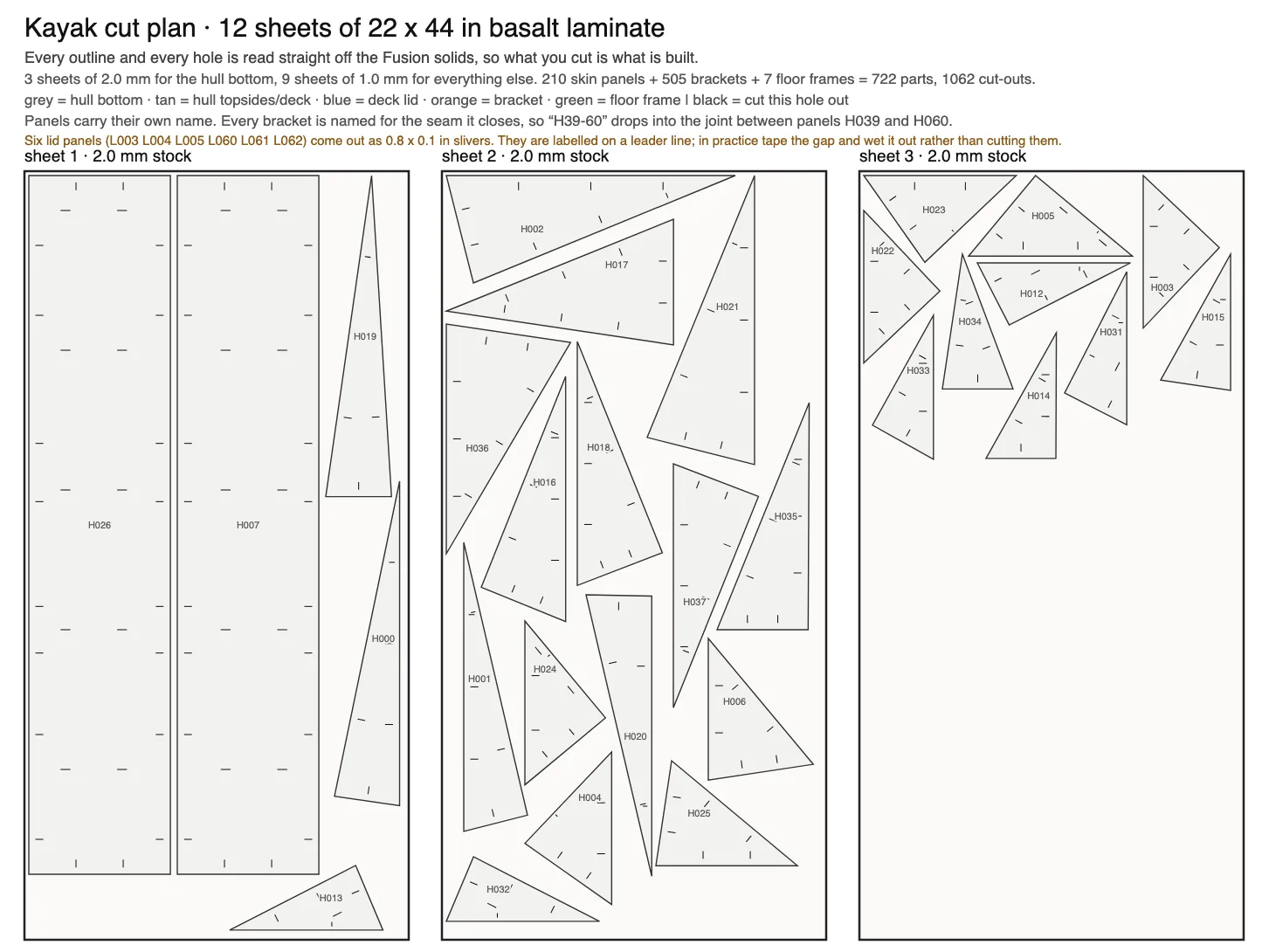
The whole project comes down to twelve sheets, 722 parts and 1062 cutouts, with every outline read straight off the solid model instead of drawn again by hand.

Six lid panels come out as slivers about 0.8 by 0.1 inches, too thin to cut, so the plan just says to tape the gap and wet it out instead.

A wide nesting diagram of twelve rectangular sheets packed with hundreds of numbered kayak panels, ribs and brackets
PL 11The whole boat, flat. Twelve sheets of 22 by 44 in laminate, every outline and every hole read straight off the solids.
A detail of the cut plan showing sheets one to three of 2 mm stock, with large triangular hull bottom panels labelled H000 through H036
PL 12The three 2 mm sheets, close enough to read. Every panel carries its own name, and the note in orange is a known defect.
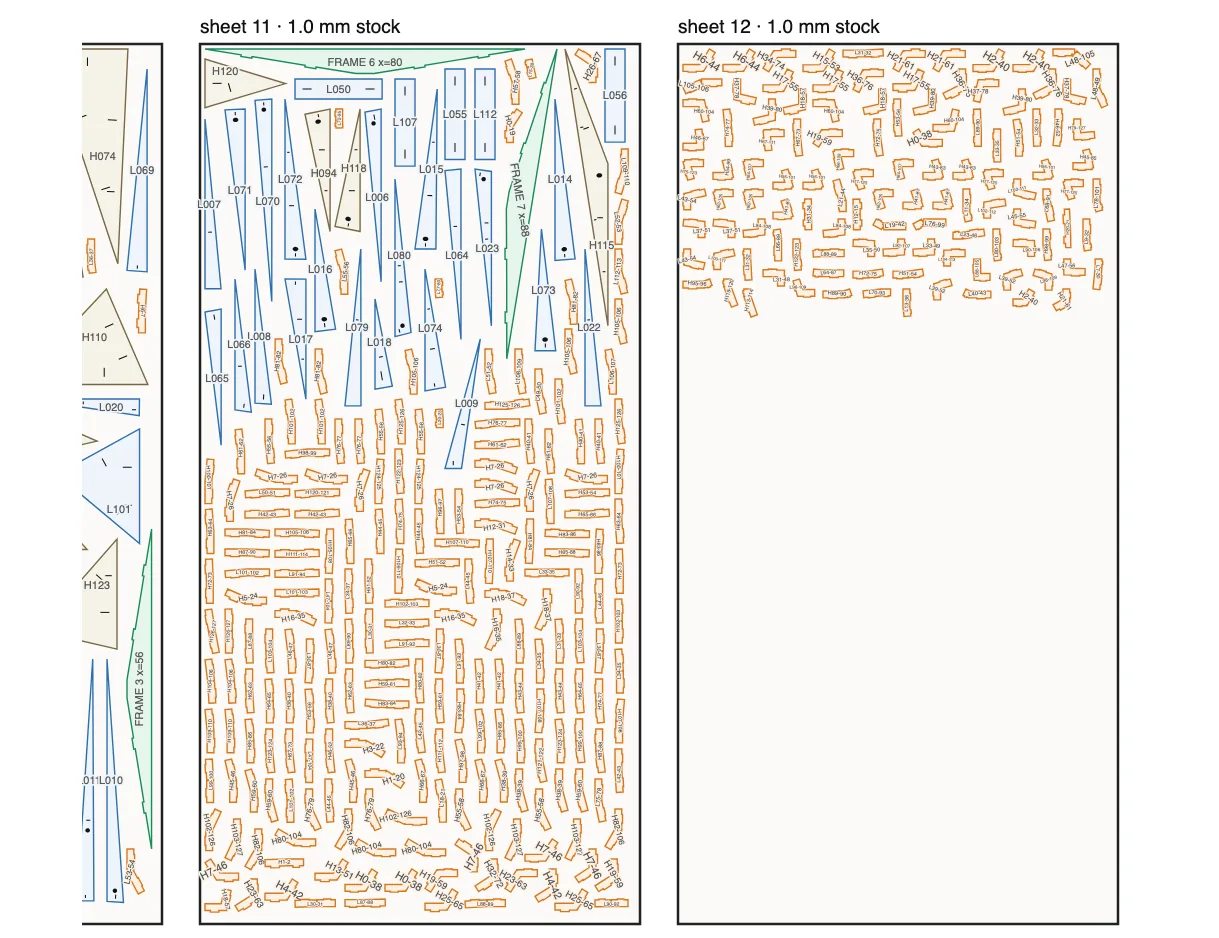
A detail of the cut plan showing two sheets densely packed with hundreds of small orange bracket outlines
PL 13The last two sheets are almost all bracket. Three hundred and sixty-eight of the 505 nest onto these two alone.
A dense multi-column table listing each bracket by the seam it closes and the sheet number it is cut from
PL 14The assembly key, in full. Every bracket, the seam it closes and the sheet it is on, so a part found on the floor has a home.

Sheet 08 of 10/Material

Basalt against carbon

Basalt and carbon versions got rendered from the exact same 722 parts, just a different sheet fed into the cutter.
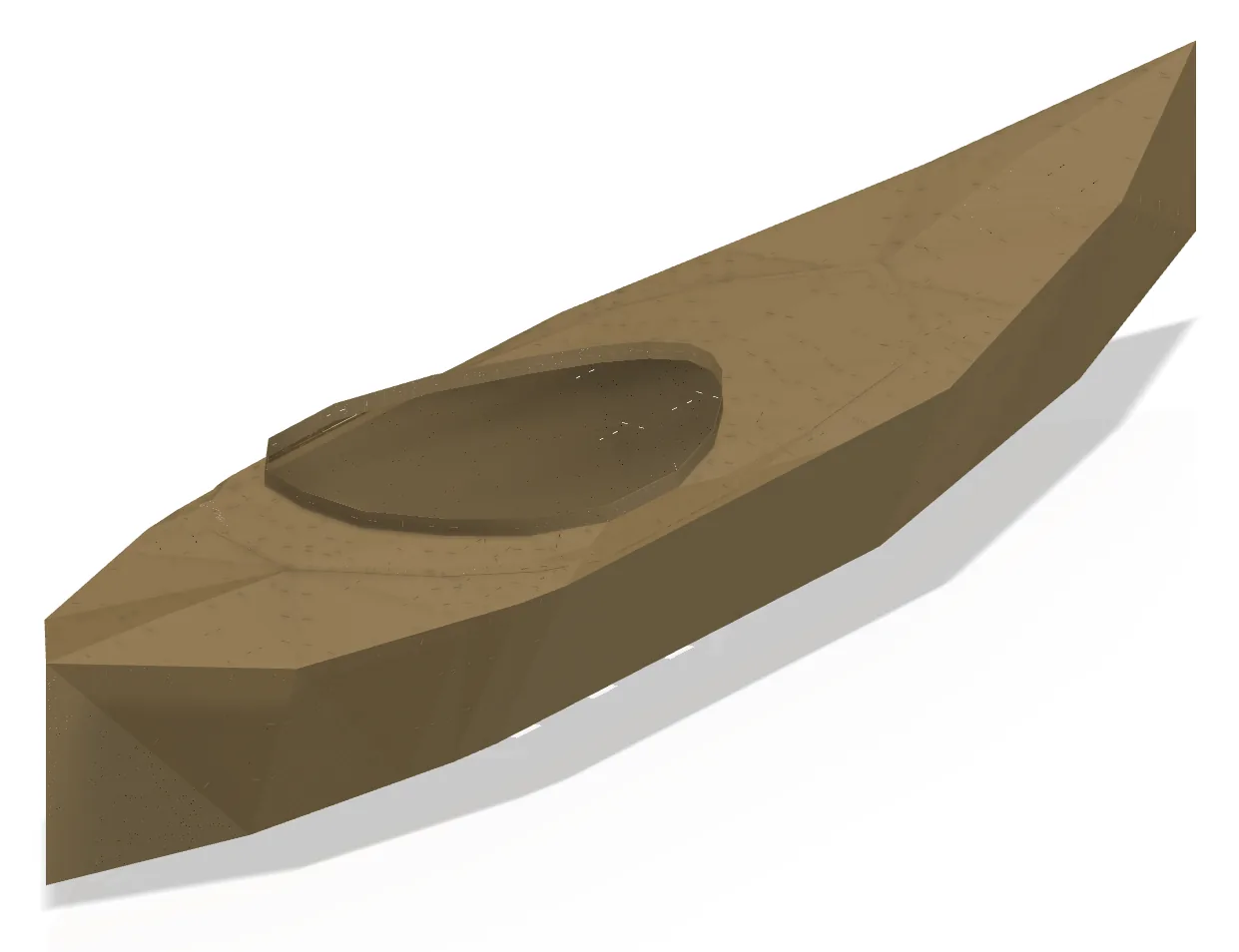
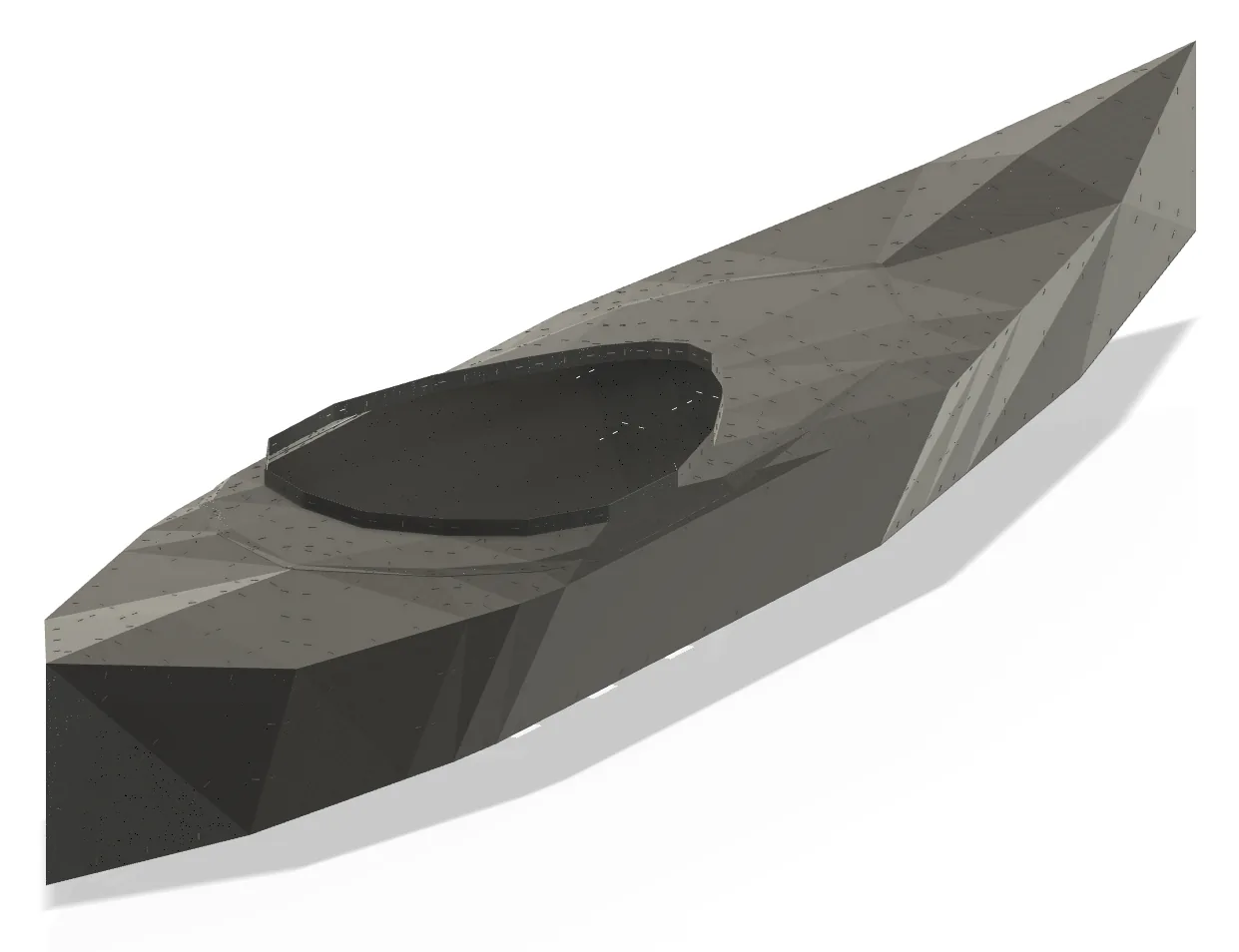
A render of the kayak in olive-gold basalt laminate seen from three quarters astern
PL 15Basalt, from astern. Olive-gold, and the reason the boat is named for its material rather than its shape.
A render of the same kayak in dark grey carbon laminate seen from three quarters astern
PL 16Carbon, same angle. Same geometry, same 722 parts, and a different reel loaded into the machine.
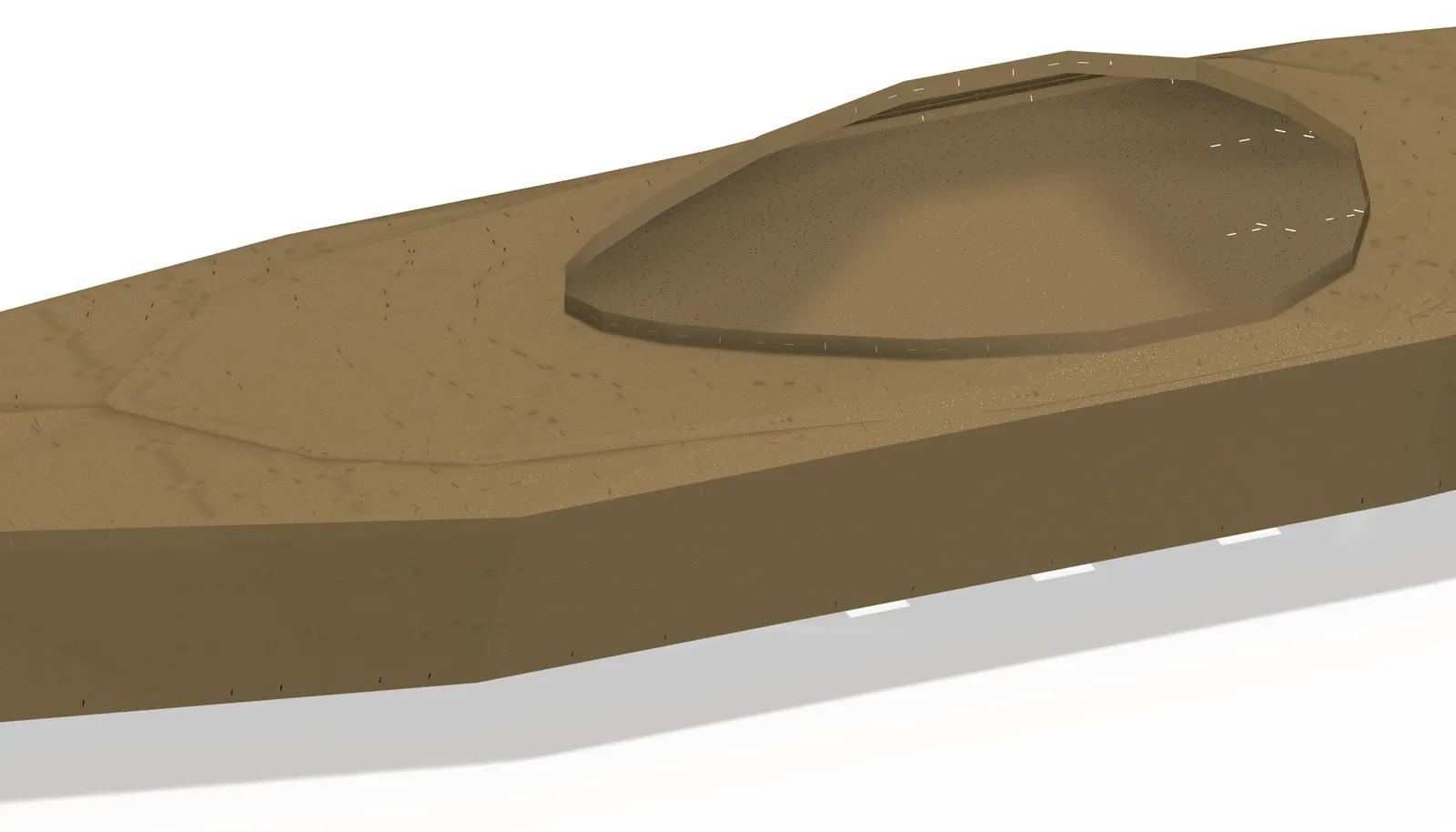
A close render of the kayak cockpit opening in basalt laminate, with a raised coaming ring and small slots visible in the deck
PL 17The cockpit rim in basalt, close. The dashes around the opening are the bracket slots, cut into the panel before it folds.
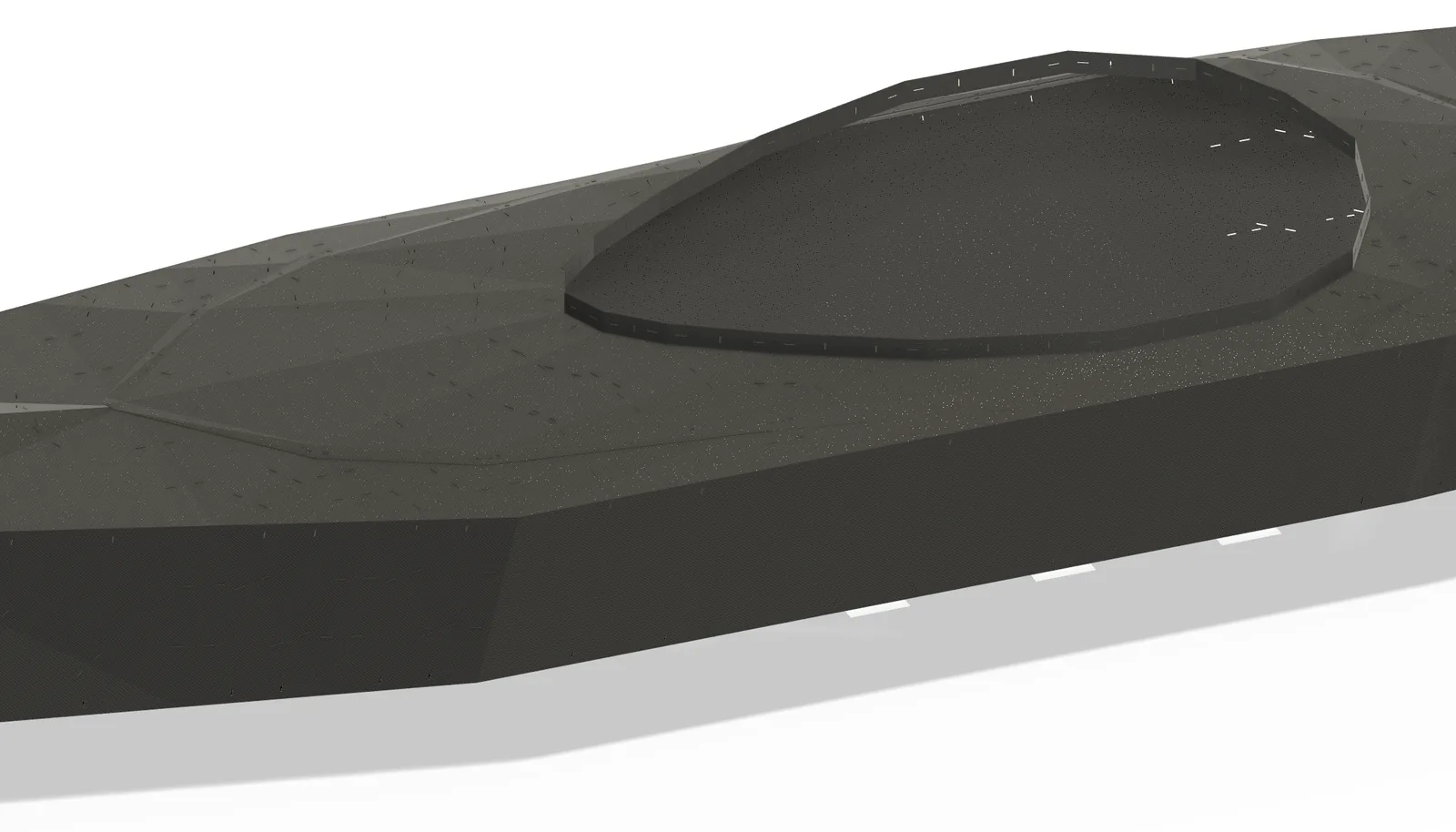
A close render of the same kayak cockpit opening rendered in dark carbon laminate
PL 18The same rim in carbon. The renders exist because the choice of fiber changes the cost and the look, not the drawing.

Sheet 09 of 10/The paddle

Not drawn yet

There's a slot on this page for a Greenland paddle, but nothing for it has been drawn yet.

REF 21Greenland paddle, general arrangementassets/projects/basalt-fiber-kayak/21-greenland-paddle-general-arr.webp

Sheet 10 of 10/Status

What this is not

It is not a boat, no panel has been cut and no seam has been bonded. The next real step before committing to twelve sheets is bonding one seam on scrap to see if the numbers actually hold up.
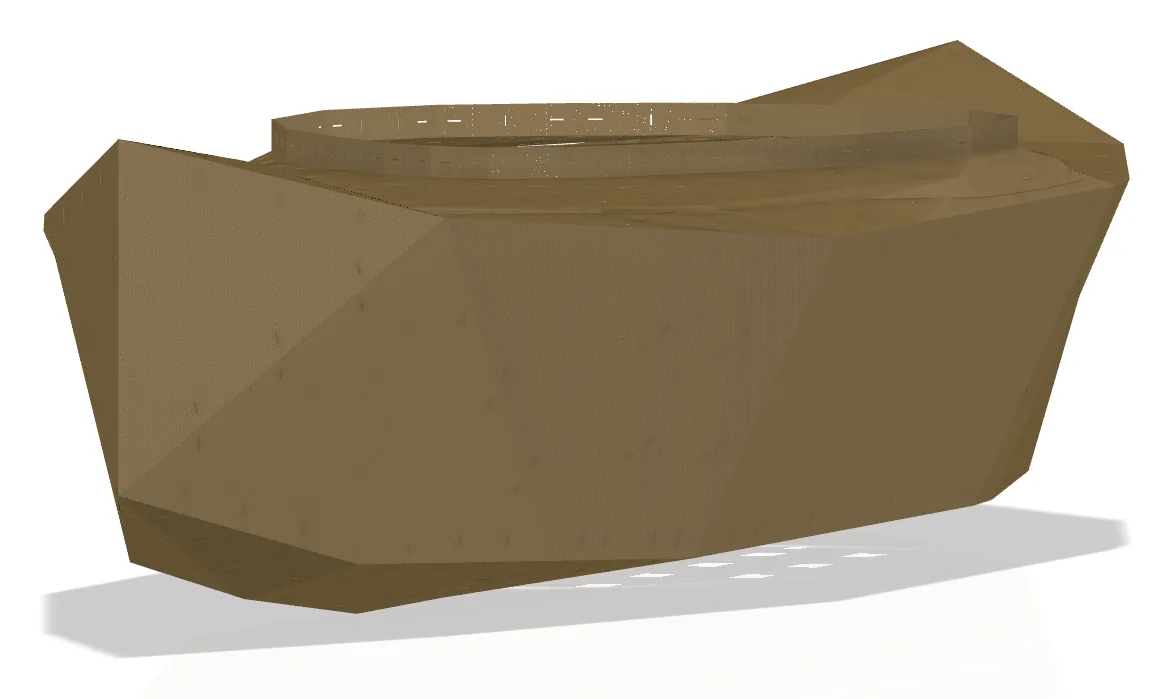
A low head-on render of the basalt kayak bow showing the vee bottom and the two chines meeting at the stem
PL 19Bow on, at waterline height. The section a paddler never sees, and the one that decides whether the boat tracks.