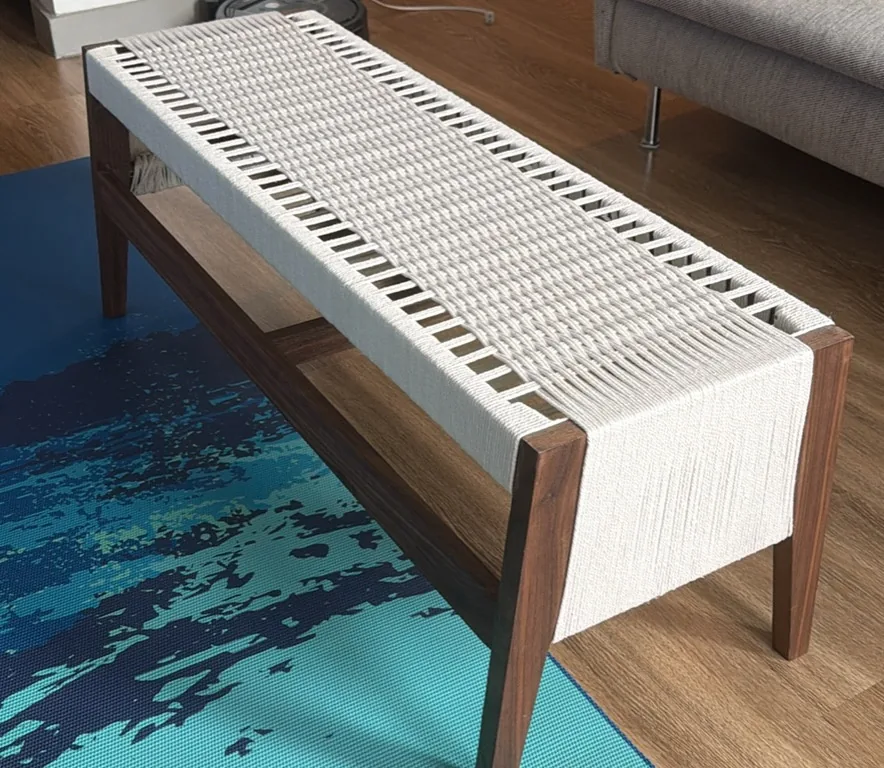
WoodworkingSolo buildDrawing 19 of 33
Bench
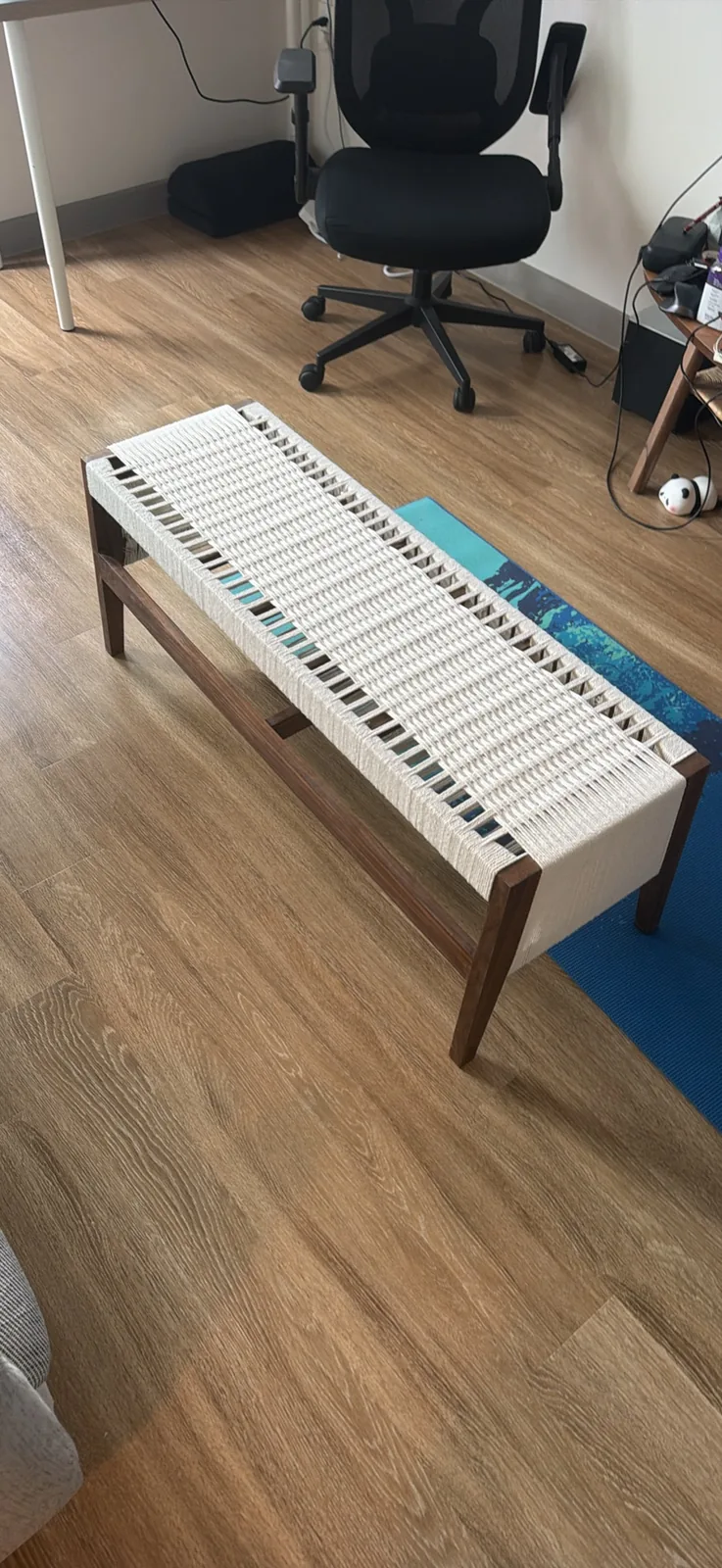
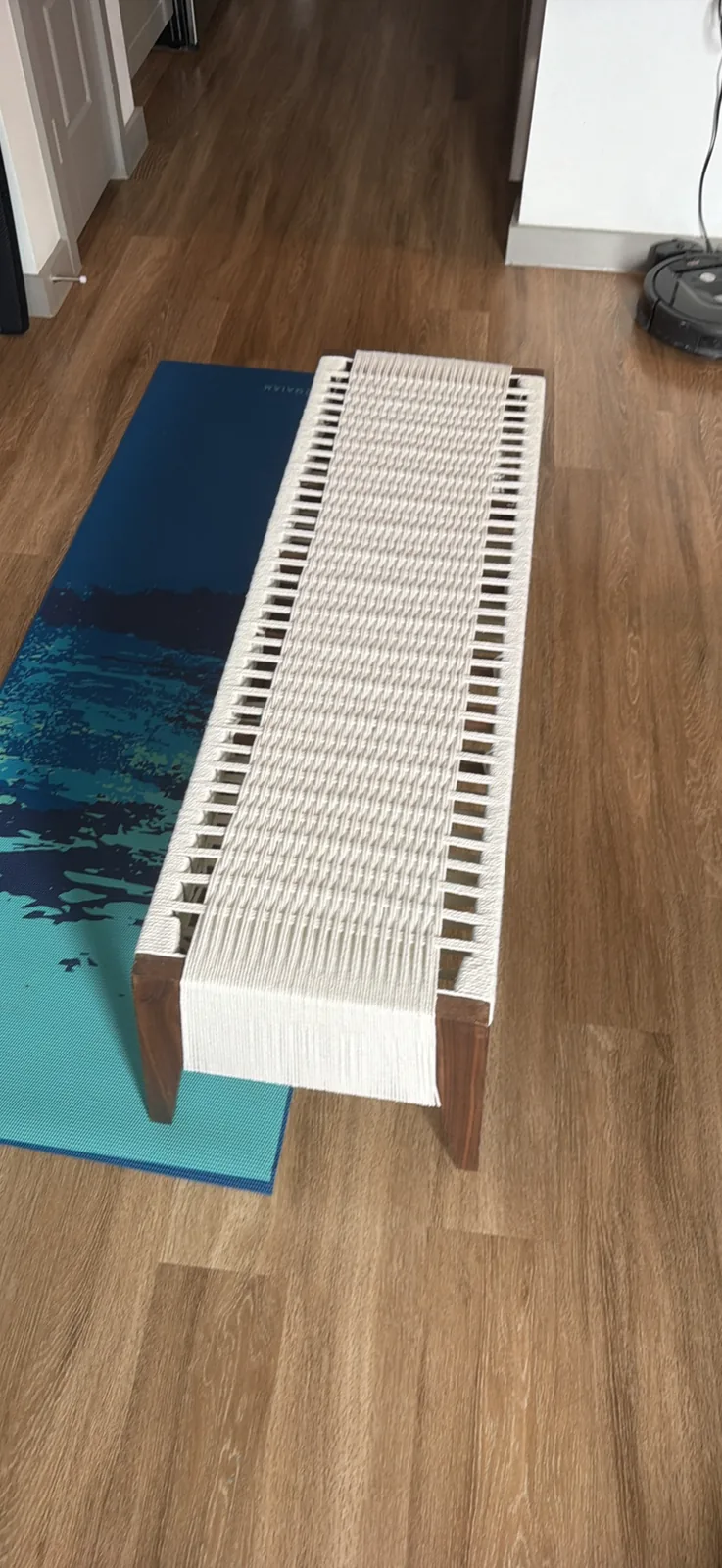
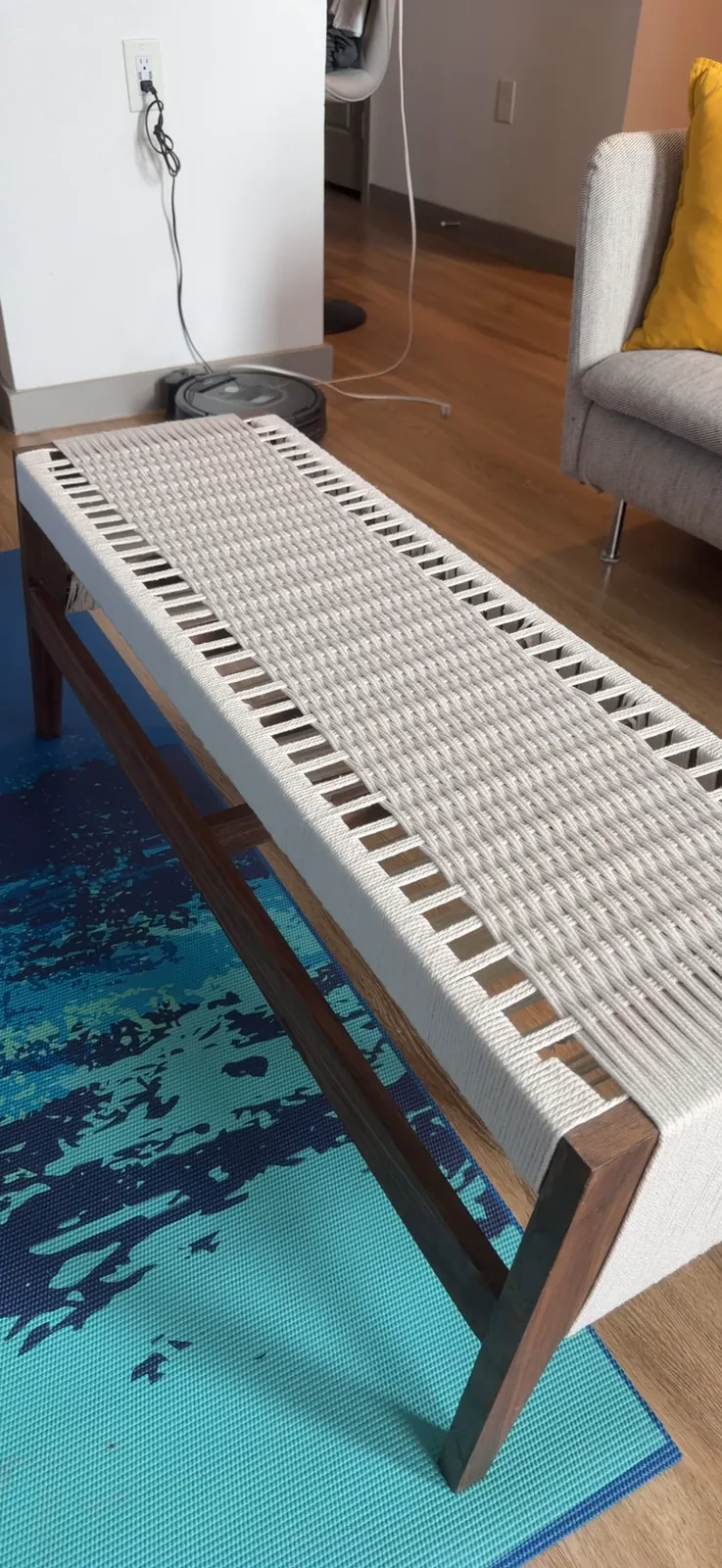
Walnut and maple frame, with the seat woven on by hand out of rope. Most of the problem is keeping the frame square, not holding the weight.
- StatusBuilt, in use
- WoodsWalnut, with maple end frames
- SeatRope, woven on by hand
- Not recordedDimensions, joinery, finish
Sheet 02 of 06/Not a box
A bench is not a box
A box only has to look right. A bench gets sat on.
Sheet 03 of 06/Racking
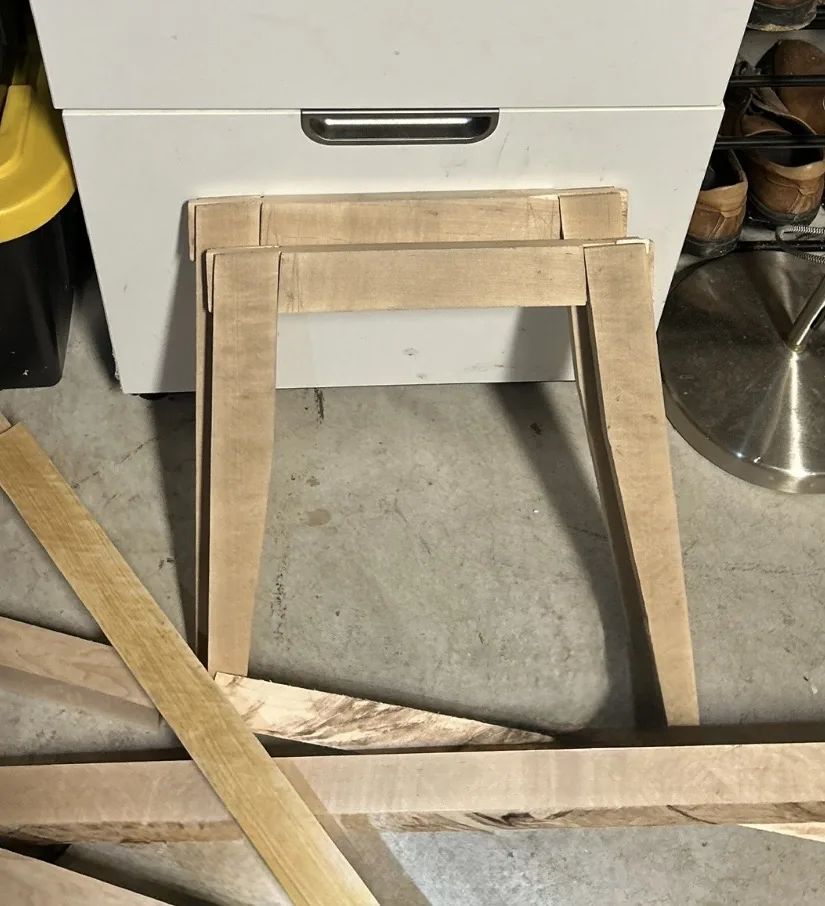
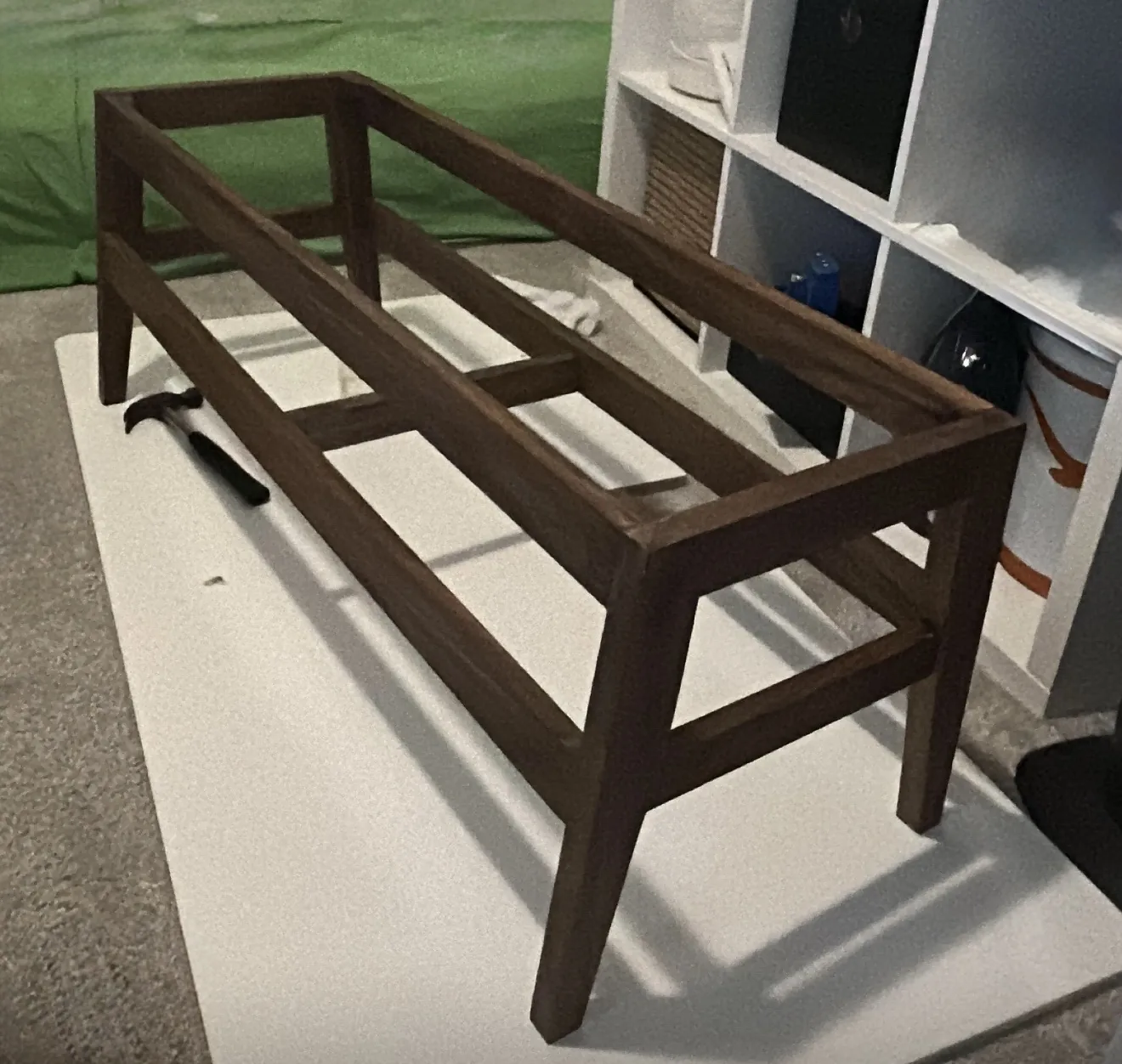
Racking is what kills a bench
What kills a bench is not strength, it is racking: the frame leaning sideways a little more every time somebody sits on one end.
Sheet 04 of 06/The weave
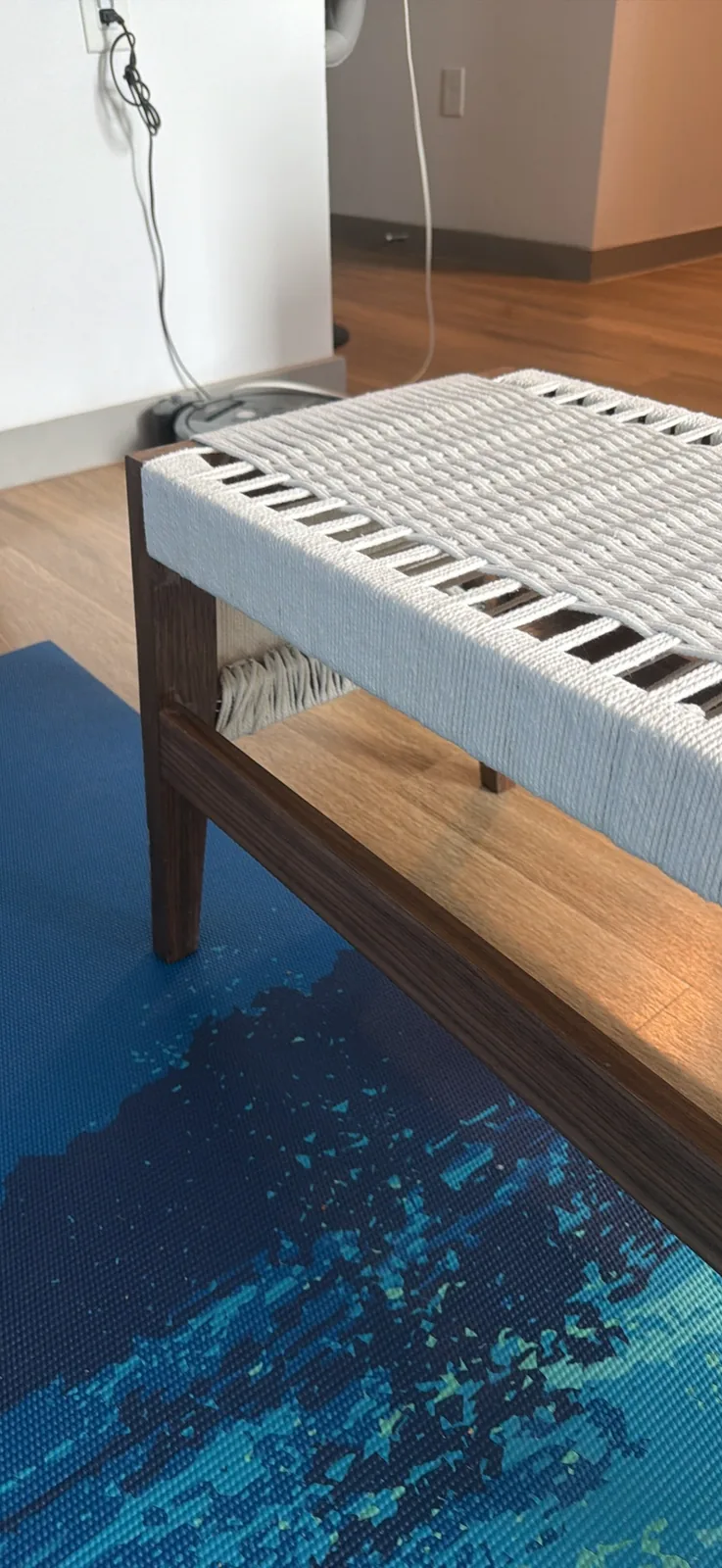
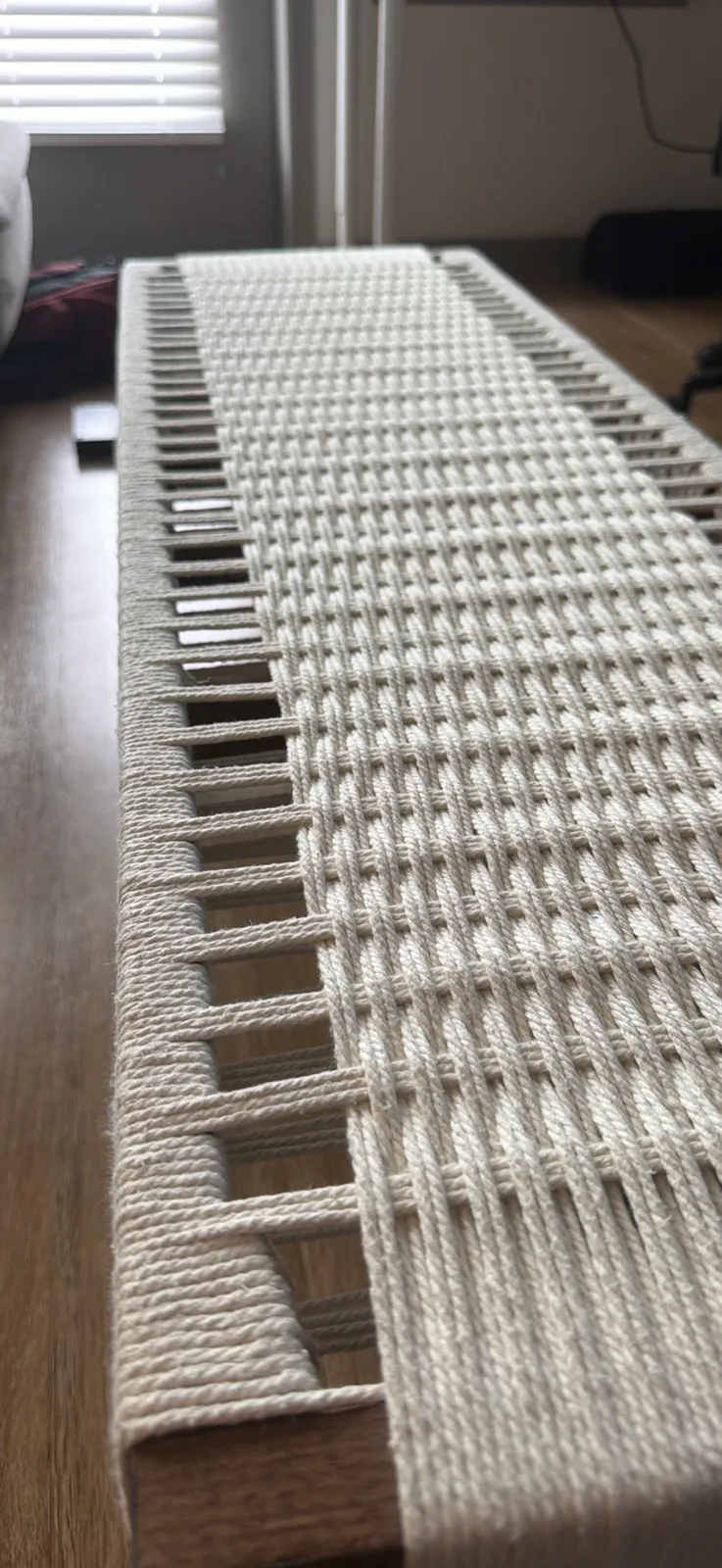
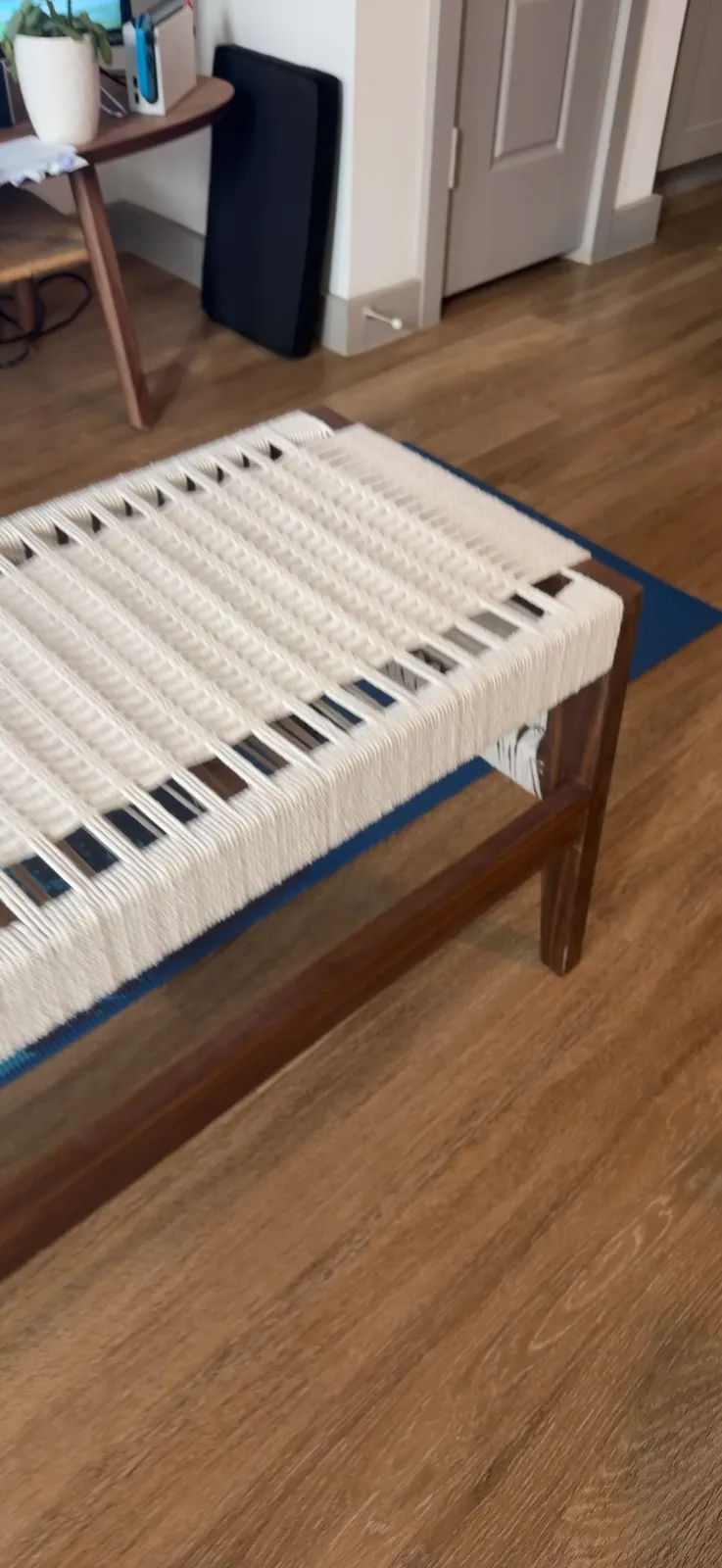
The seat only works in tension
Rope has no stiffness of its own, so sitting on it pulls the two rails toward each other instead of pushing them down.
Sheet 05 of 06/Flat floor
Floors are not flat
A bench built perfectly square still rocks on a real floor, and a bench that rocks is a bench that racks.
Sheet 06 of 06/Next time
What I would do differently
Draw it first, and write down the load case, even one sentence of it.
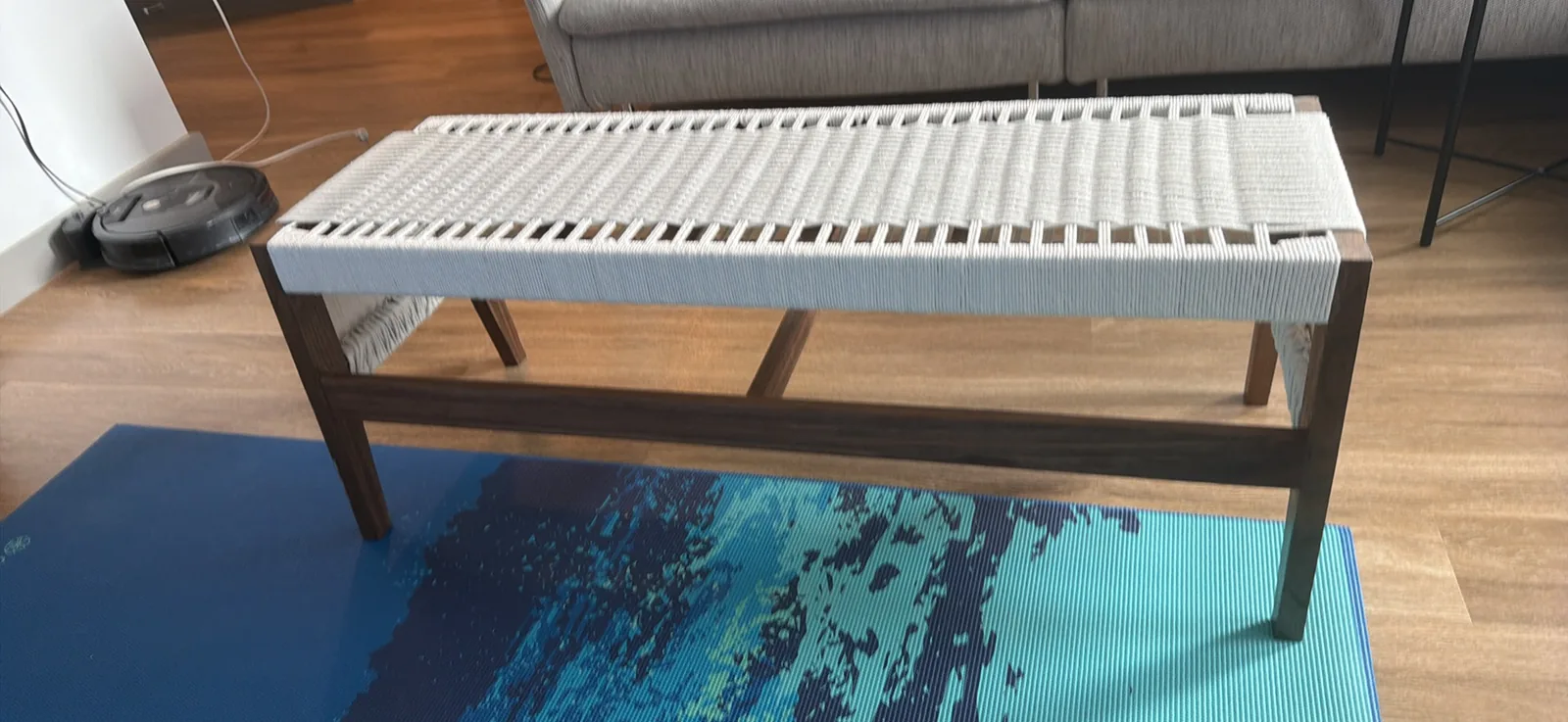
PL 10Side elevation, on the floor. The whole frame in one line: the rails, the splayed legs, and the stretcher tying the two ends together.