Science-fair prototypeDrawing 20 of 33
Pielar
Panel
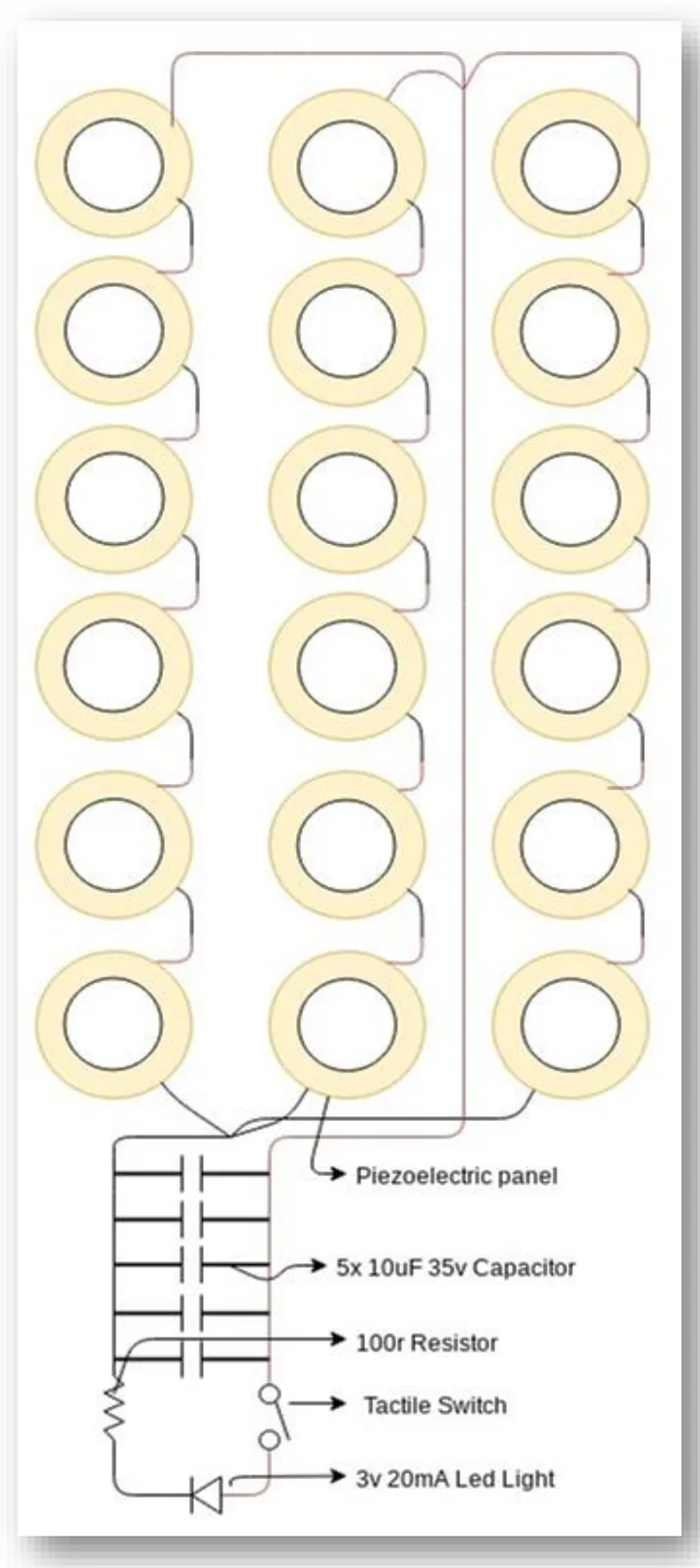
A solar panel sitting on springs above a bed of eighteen piezoelectric discs, so rain hitting the panel makes power too. I built it with a classmate for a science fair, March 2019.
- StatusBuilt for a science fair, March 2019
- Prototype3D printed three-part frame, 18 piezoelectric discs, 6 springs
- CostAbout $193 per panel, in 2019 parts
- EvidenceCalculated from 30-year weather averages, never bench tested
Sheet 02 of 07/The idea
The idea
Put a solar panel on springs over a bed of piezoelectric discs, so rain pushes the panel down and makes power on its own.
Sheet 03 of 07/The build
What I built
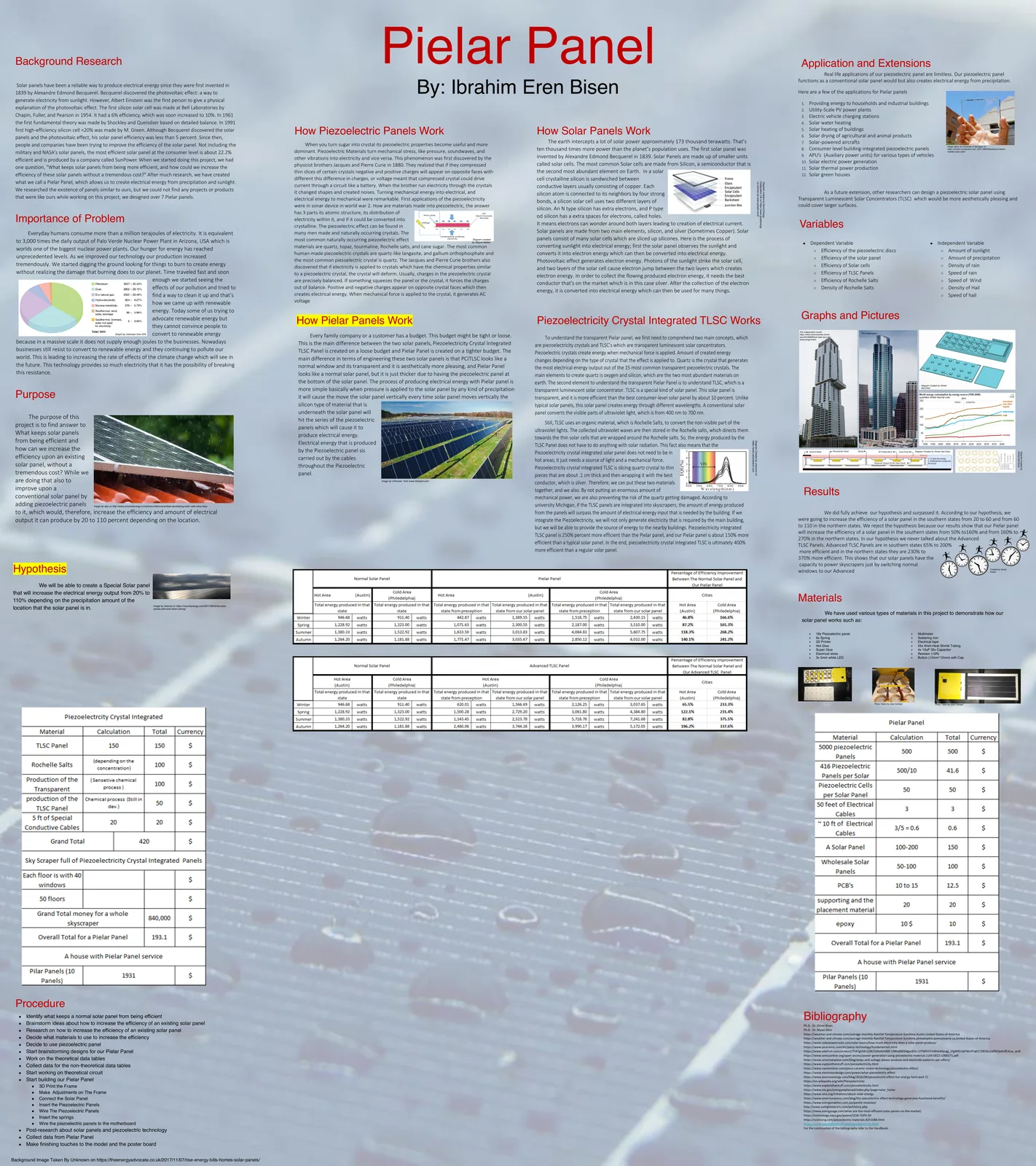
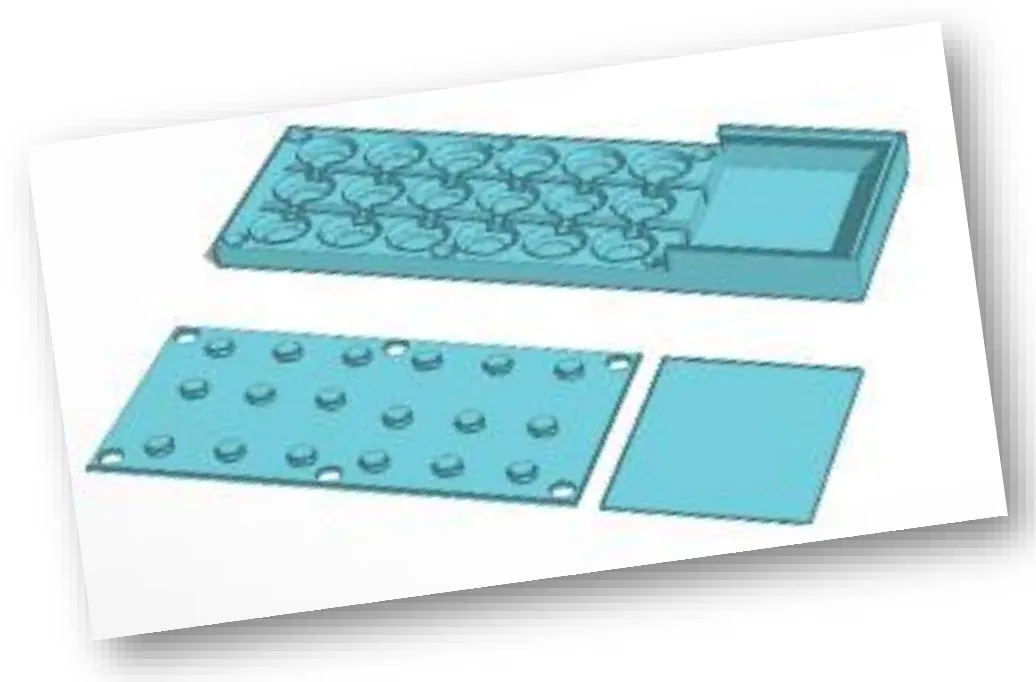
I 3D printed three stacked parts: a carrier on six springs, a bed of eighteen piezoelectric discs, and a circuit tray with a switch and LED that lights up to show the charge coming back out.
Sheet 04 of 07/The crystal
The crystal that never grew
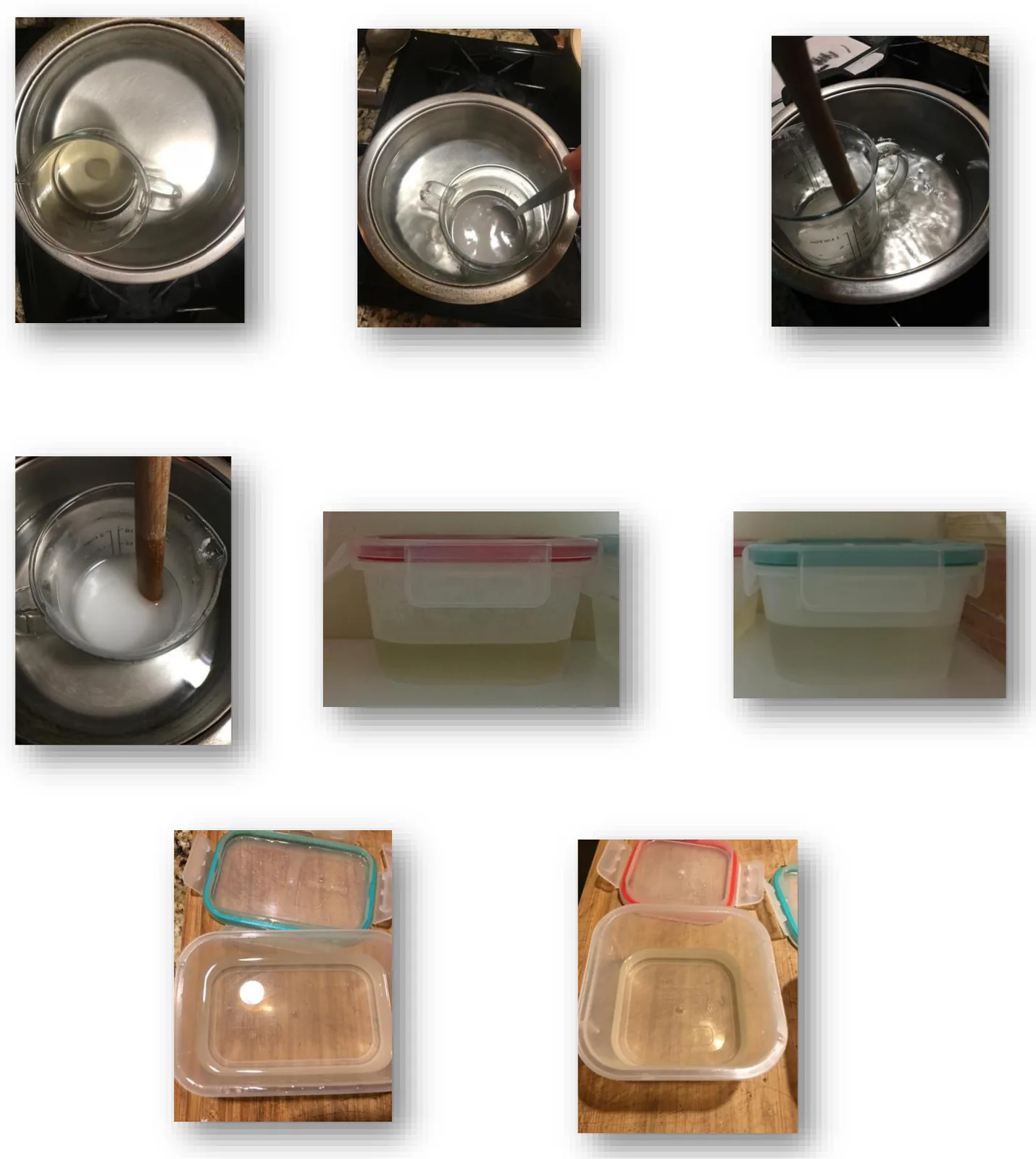
I tried to grow my own piezoelectric material, Rochelle salt, cooked up on the stove and left for a month, and nothing crystallized because I used baking soda instead of washing soda.
Sheet 05 of 07/The numbers
Just a spreadsheet
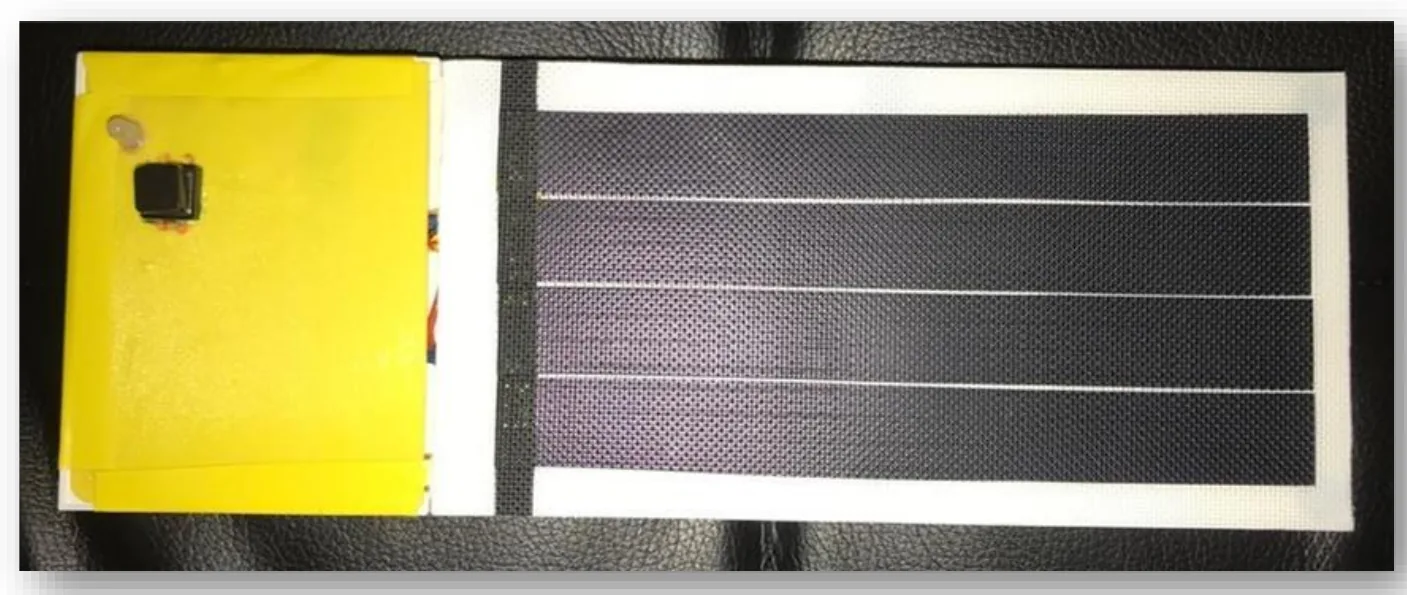
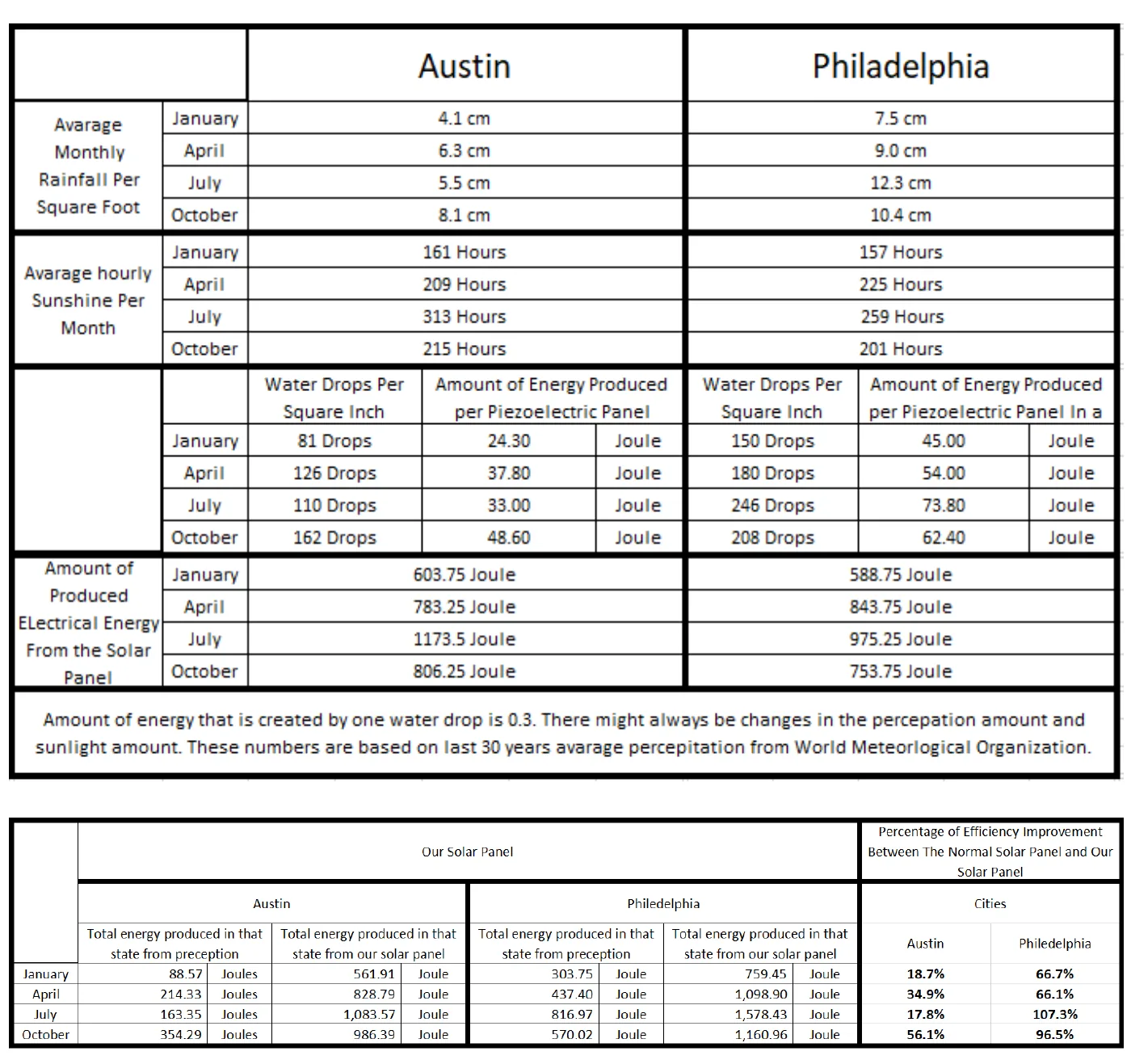
The numbers on the board are a spreadsheet, not a measurement: I calculated an 18 to 107 percent improvement from 30-year rain and sun averages, and the board's own results claim a lot more than that.
Sheet 06 of 07/Next time
What I'd do differently
Next time I'd measure a real panel against a bare one before doing any more math, since I calculated a lot and never once tested the actual thing.
PL 06Trying to grow my own Rochelle salt in a double boiler on the kitchen stove. A month later there was still nothing in the containers.