Product ventureDrawing 17 of 33
Complete
Desk
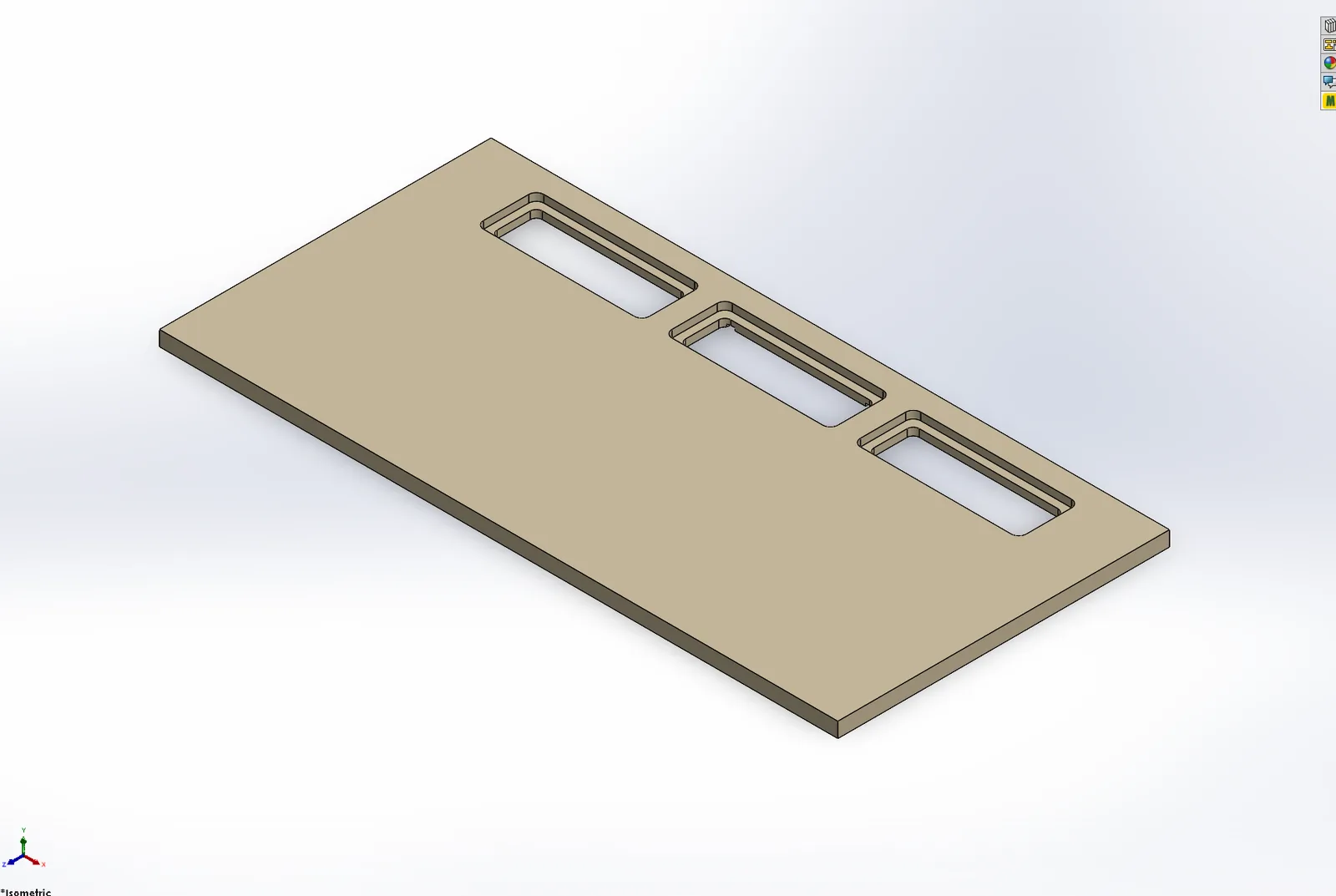
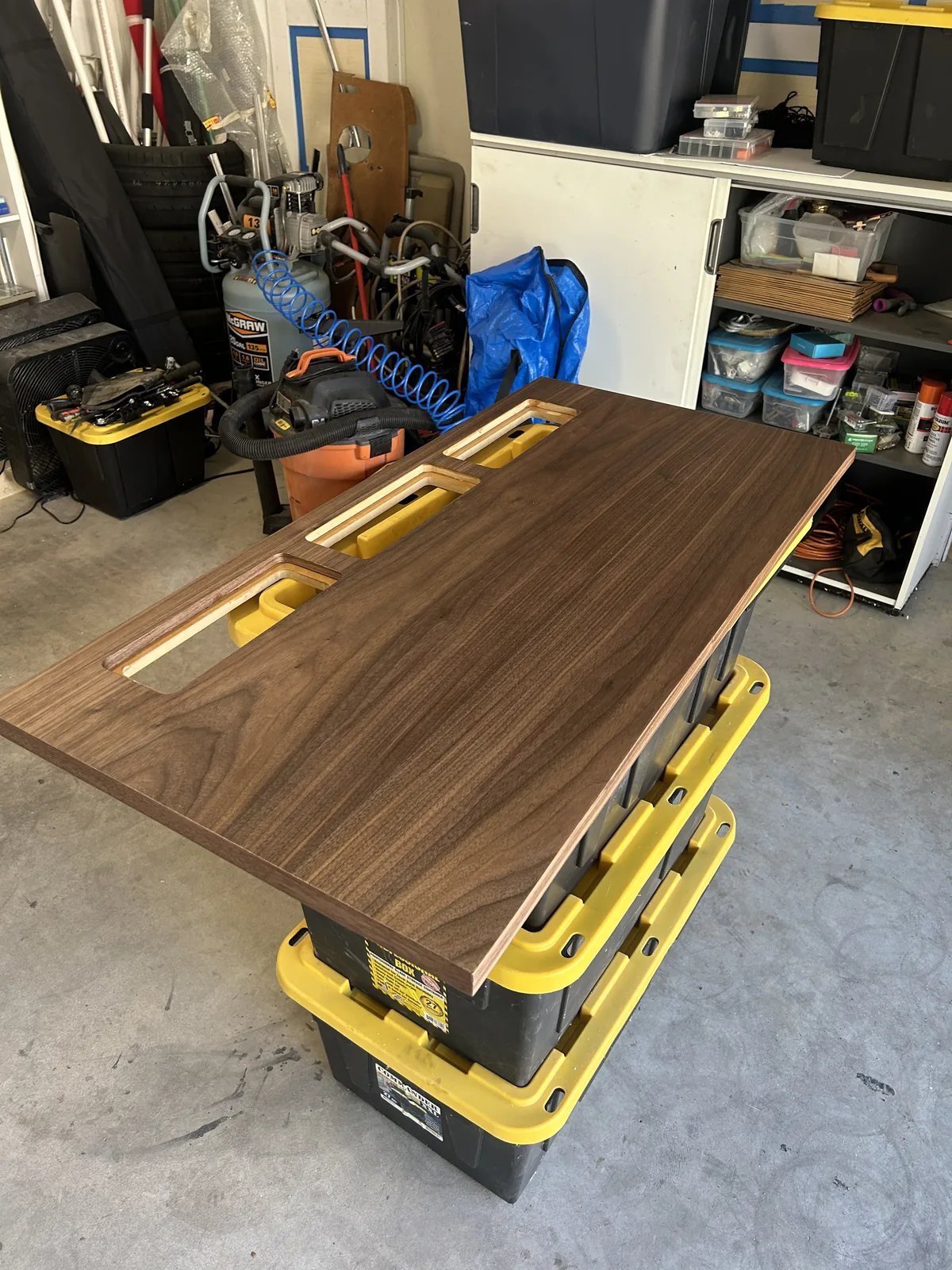
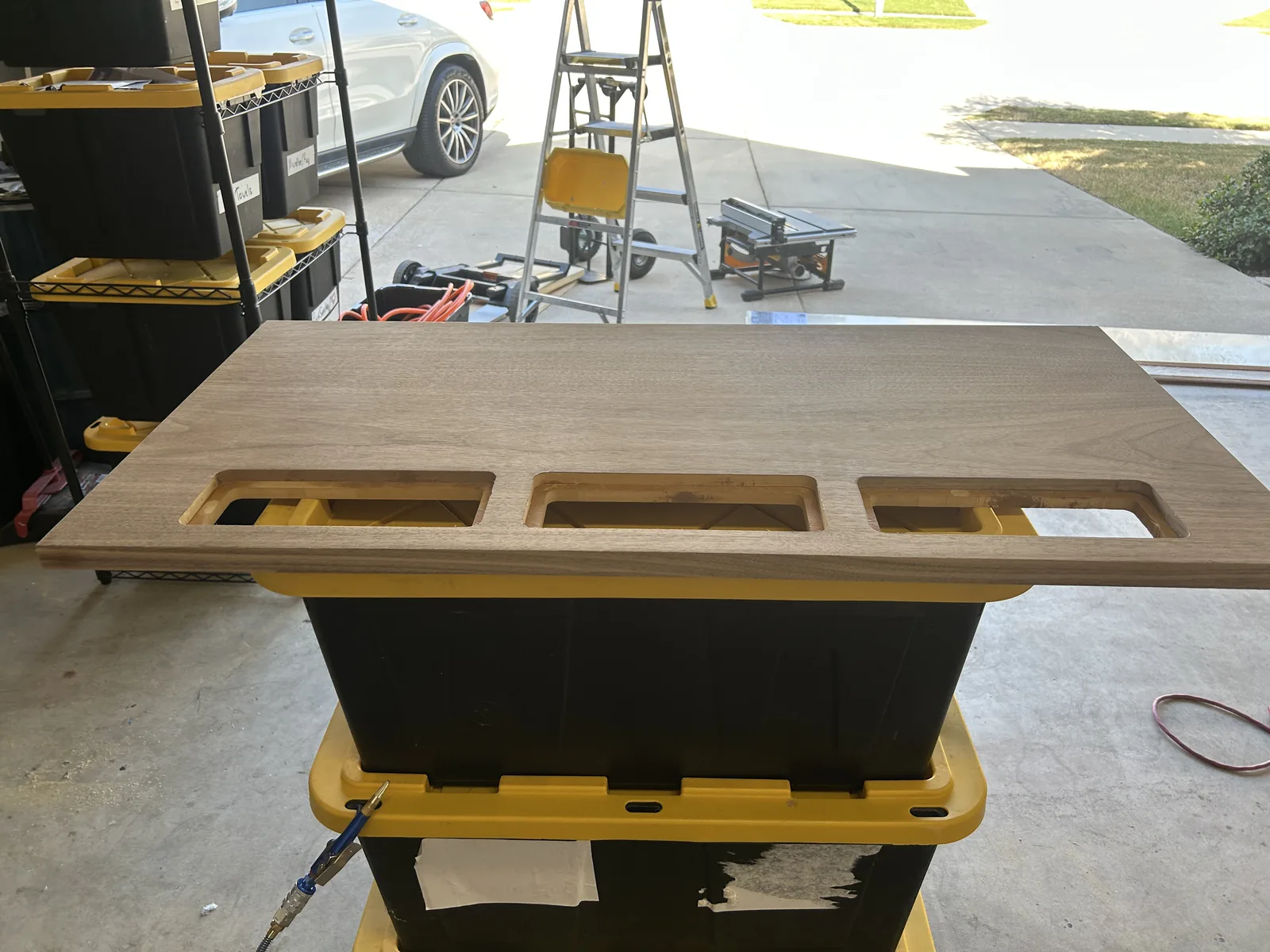
A desk with ports machined into the top and a bolt grid underneath, so a lamp, a shelf or a monitor arm drops in without replacing the desk. Only one top actually exists, cut on totes in a garage, and the rest of the desk doesn't.
- StatusDesigned, priced and part cut. Paused 2026
- The interfaceThree-port top at 45 by 22 inches, underside grid at 6 inch pitch
- Drawn3 desk sizes, 3 leg variants, 8 accessory modules
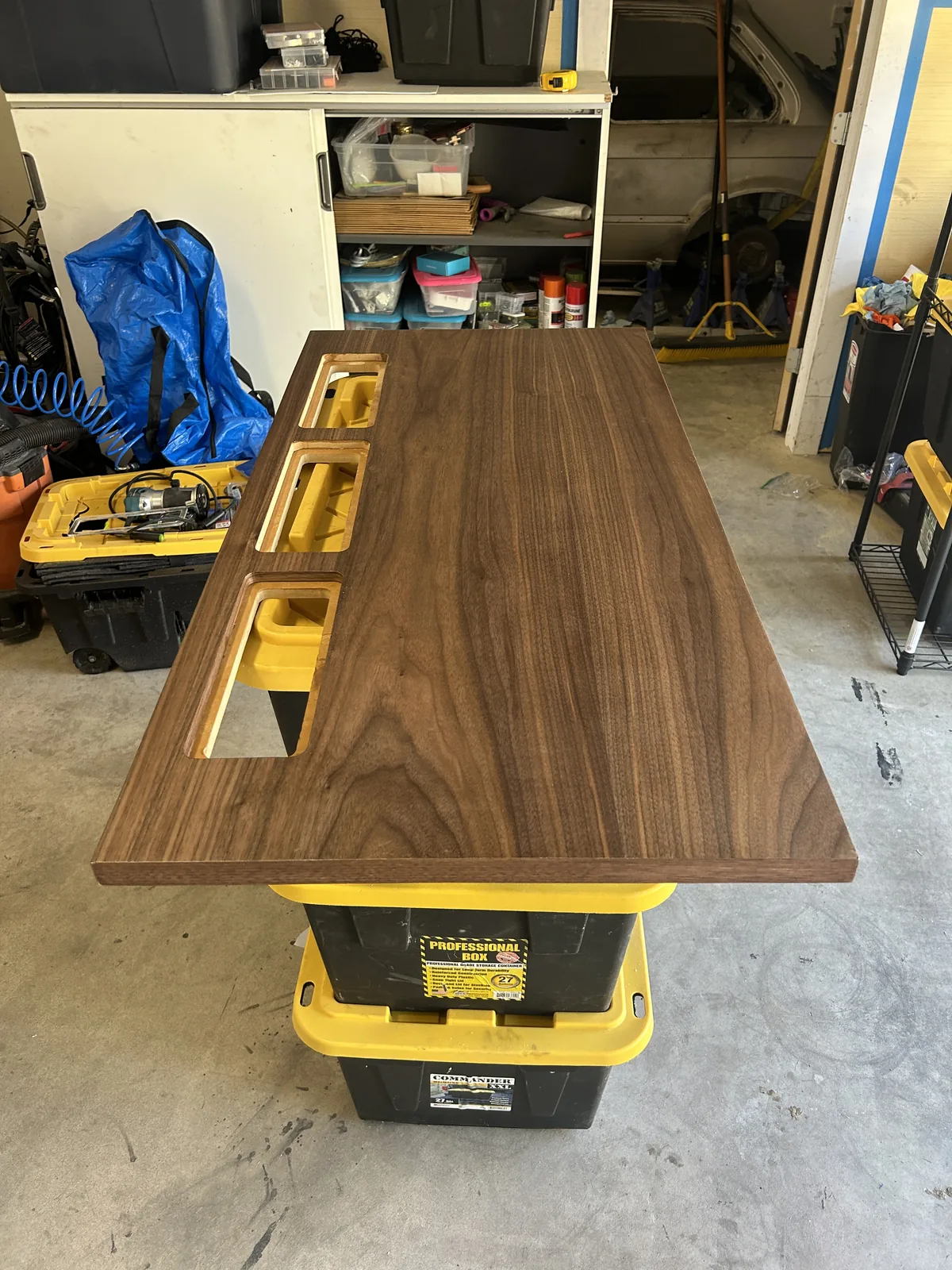
- What exists in woodOne medium top with all three ports cut
- What is missingLegs, any module, and an assembled desk
Sheet 02 of 05/The idea
Desks get replaced for the wrong reason
People don't usually replace a desk because it wore out, they replace it because what they need at the desk changed.
Sheet 03 of 05/Parts
Issued as separate drawings
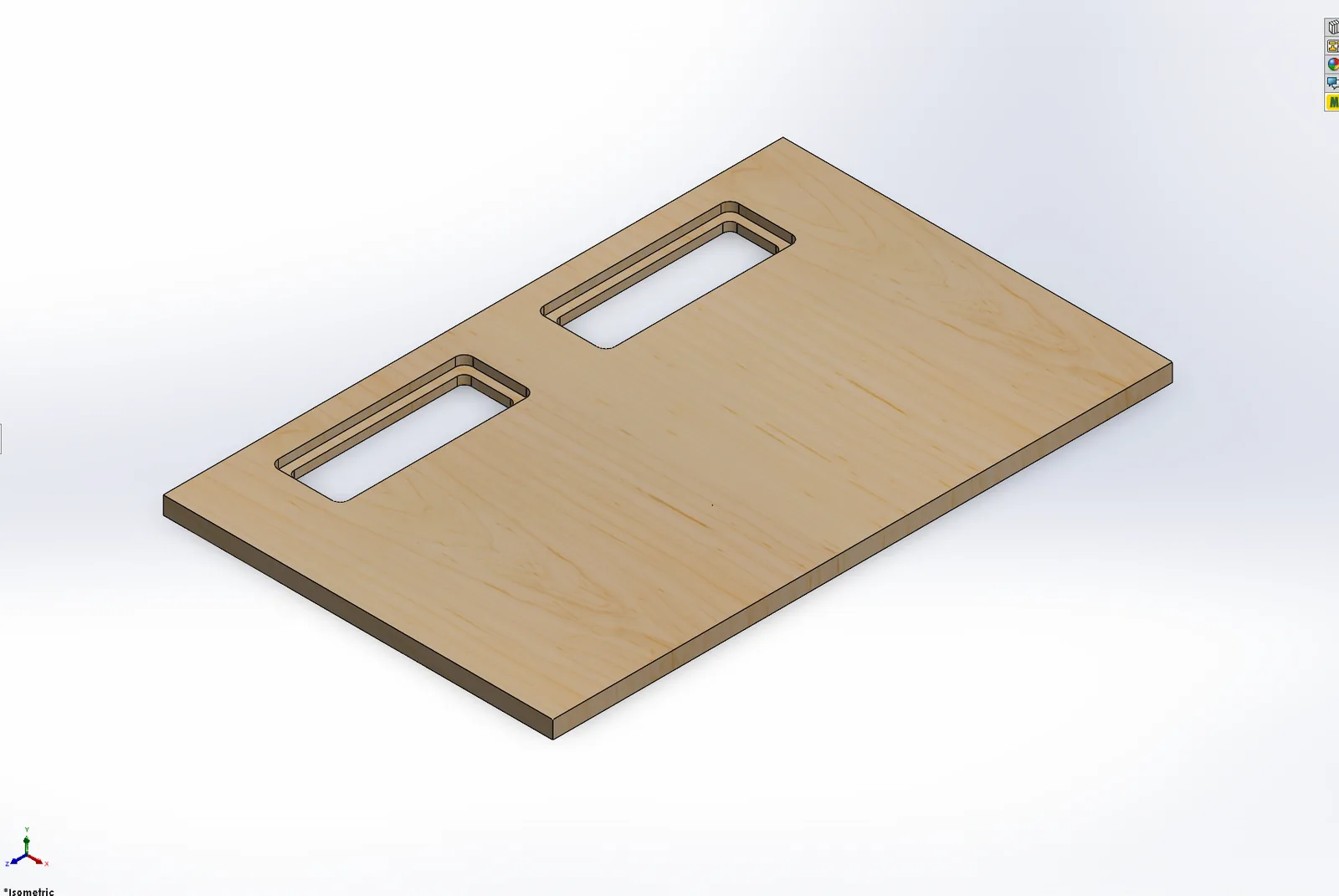
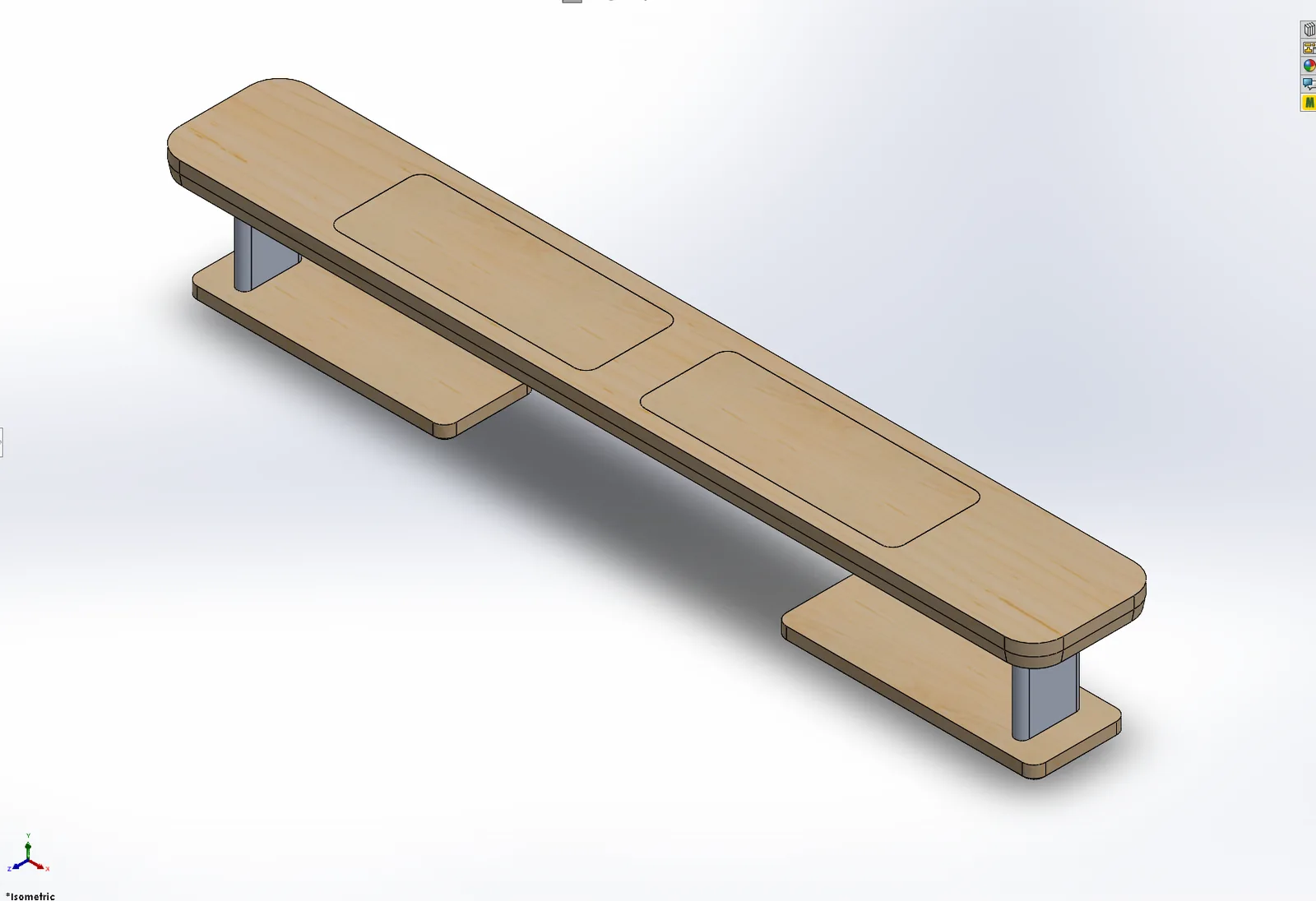
This project is more than one project. Each part below is its own set, with its own sections and pictures.
Part 01 / 02
Product design
The port, the underside grid and the eight things that plug into them. One interface drawn once and held at every size.
Part 02 / 02
The company
A mark, a cost model and a storefront that could take a preorder for a desk nobody had cut yet.
Sheet 04 of 05/Where it stands
What exists now
Everything except the top is still a drawing: the only real thing is a medium top with all three ports cut, and the legs, modules and a finished desk exist only in CAD.
Sheet 05 of 05/Got wrong
The order I did it in
I designed a whole product line, a brand and a storefront before cutting a single port into anything real, and if I restart, it starts with one port and one module, not a pitch deck.