A reinforced concrete test cell built into an earth berm under a wide blue sky, with a blue locomotive on rails to the left, safety cones in the foreground and open high desert stretching to the horizon

Professional engineeringDrawing 2 of 47

Dynamic systems
testing

I spent the summer of 2025 at MxV Rail in Pueblo, Colorado, working as a Precision Instrumentation Engineer. The job was full scale impact testing on the landing gear dampers for Blue Origin's New Glenn rocket.

Sheet 02 of 03/The job

What the job was

A full scale impact test happens once, so everything you learn from it comes out of the instrumentation. The results belong to the client program, so I can't show them here.
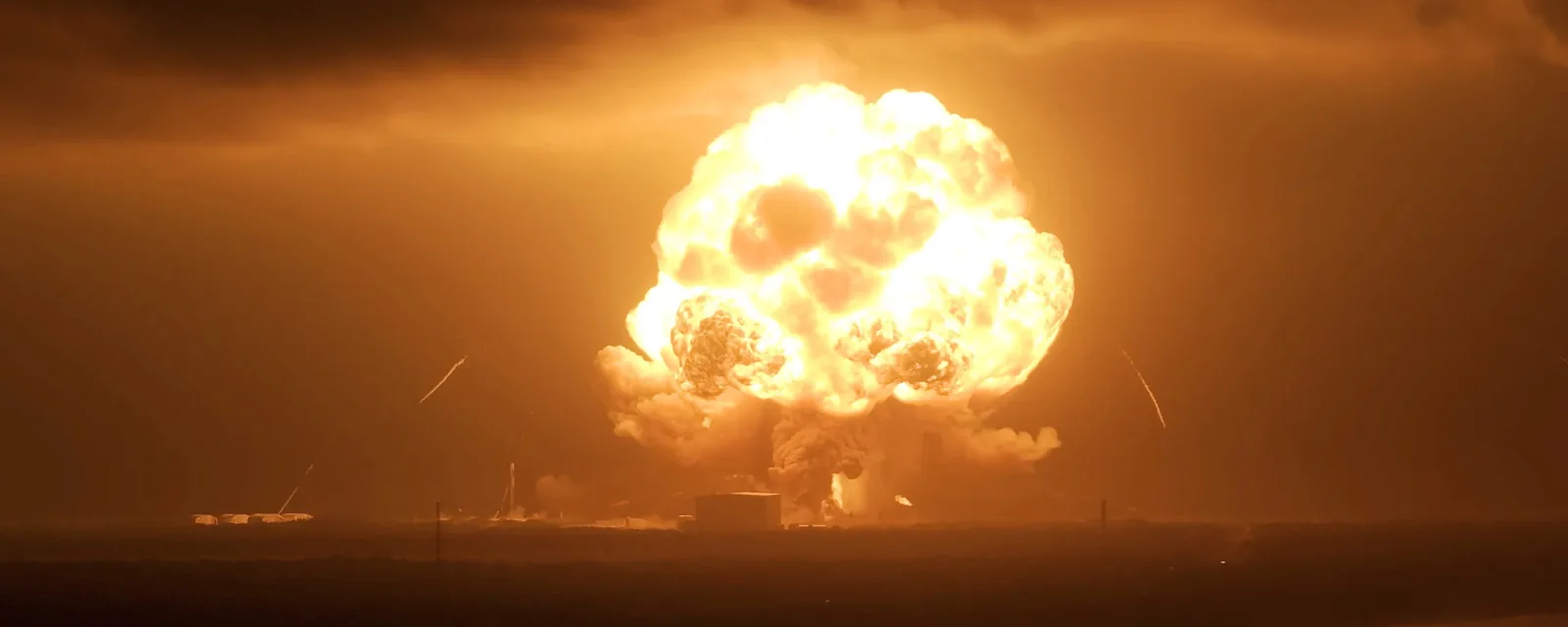
A huge orange fireball rising over a launch pad at night, lighting up the clouds, with low buildings and tanks along the horizon
PL 17New Glenn blowing up during a static fire at Cape Canaveral on May 28, 2026. The landing gear we tested was on this vehicle. Blue Origin traced the explosion to an oxygen valve in one of its engines.
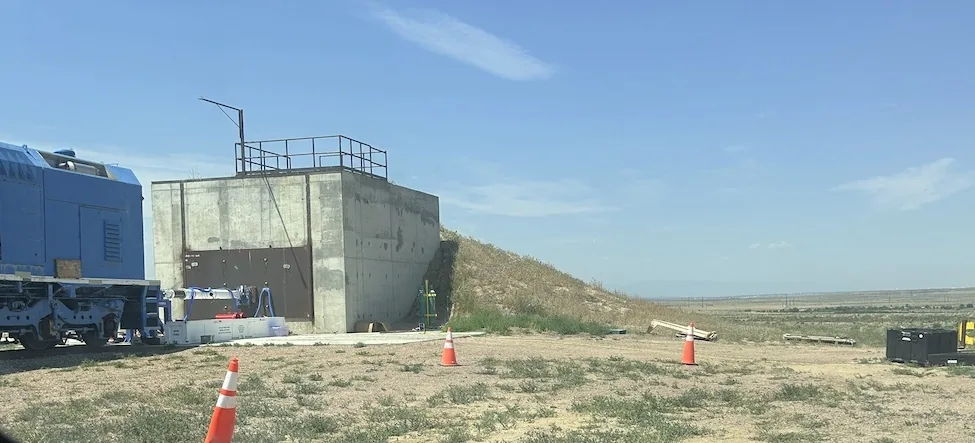
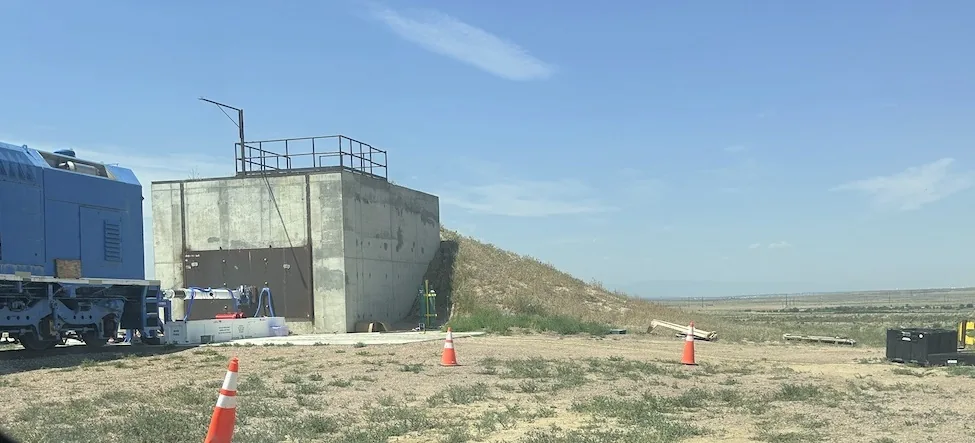
A reinforced concrete test cell built into an earth berm under a wide blue sky, with a blue locomotive on rails to the left, safety cones in the foreground and open high desert stretching to the horizon
PL 01The test cell from the outside. It's a concrete box built into a berm, on a rail siding in the high desert outside Pueblo.
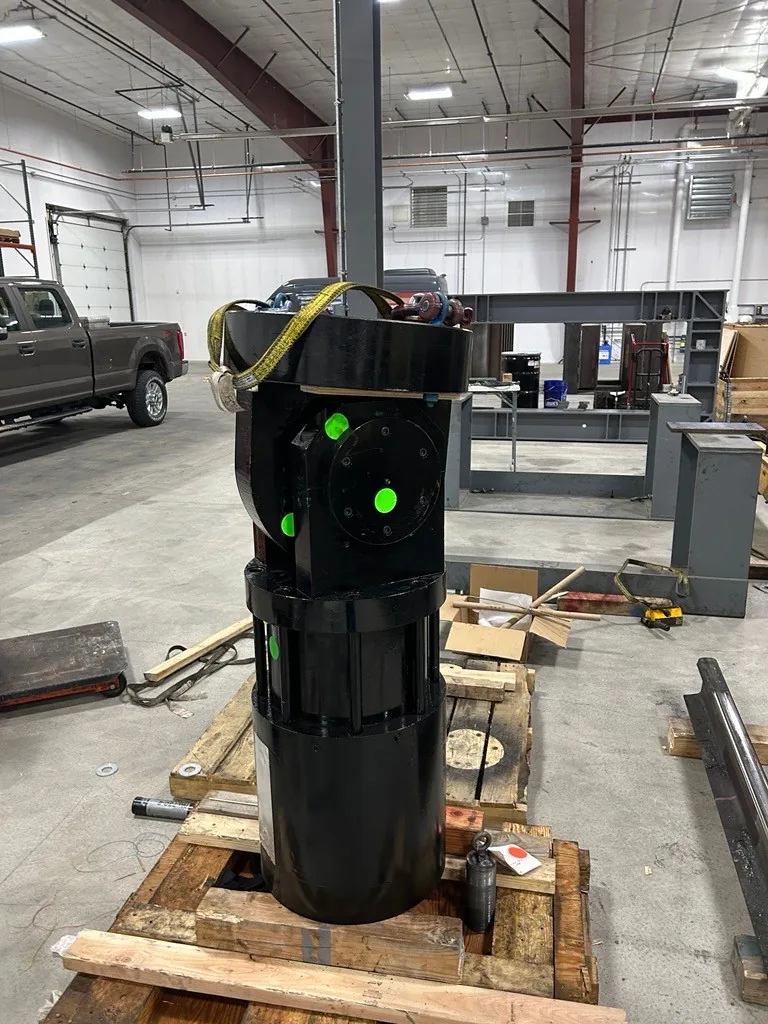
A tall black cylindrical actuator assembly with green markers, standing on a wooden pallet on a shop floor
PL 02A linear actuator assembly from my general instrumentation support work.
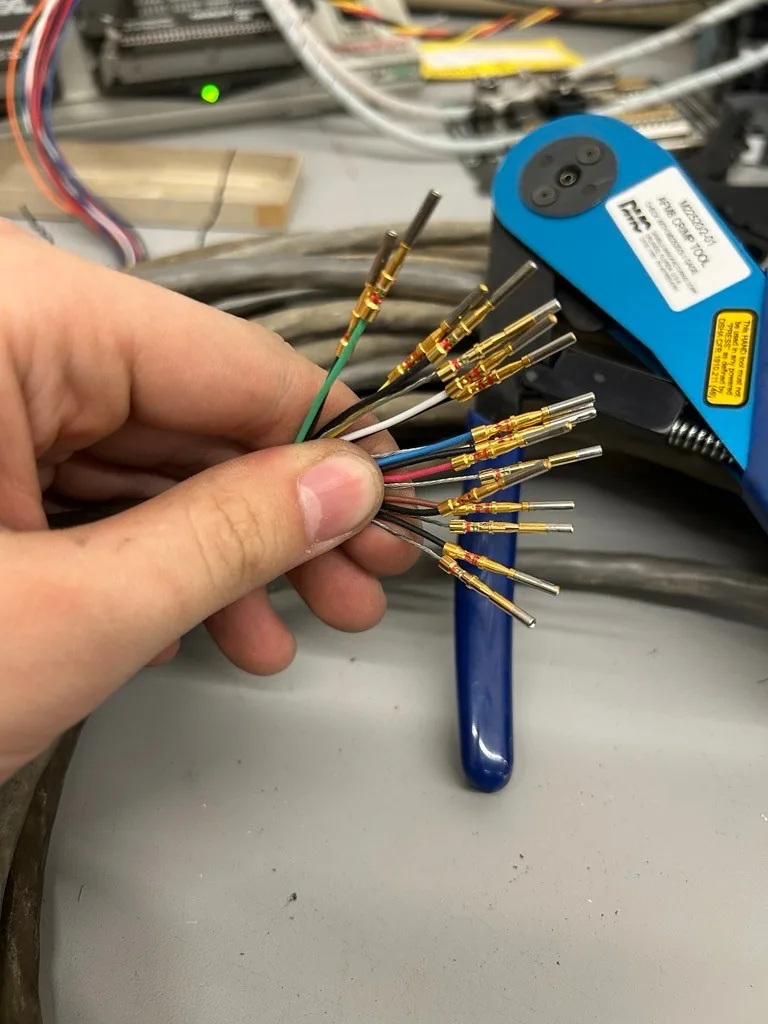
A hand holding a bundle of wires, each ending in a crimped gold pin, next to a blue hand crimping tool
PL 03Crimping pins for an 18 pin mil spec cable.
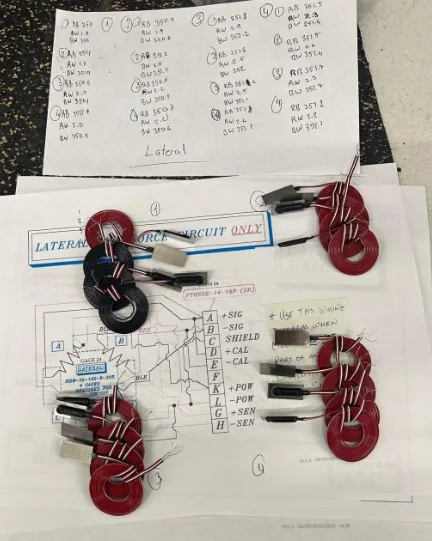
Coiled red and black strain gauge leads with small metal gauge tabs, laid on a printed wiring diagram below a sheet of handwritten notes
PL 04Weldable strain gauges laid out on a wiring diagram for calibration.
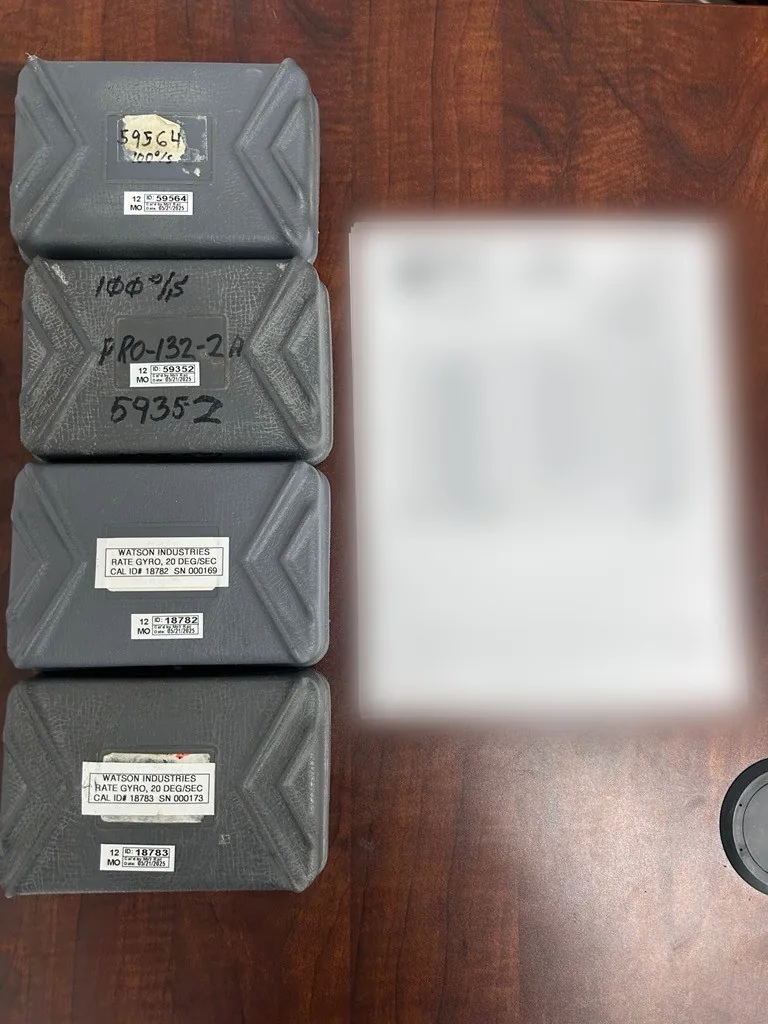
Four grey rate gyro housings with asset labels lined up on a wooden table beside a blurred calibration report
PL 05Rate gyros I calibrated, next to the calibration report.
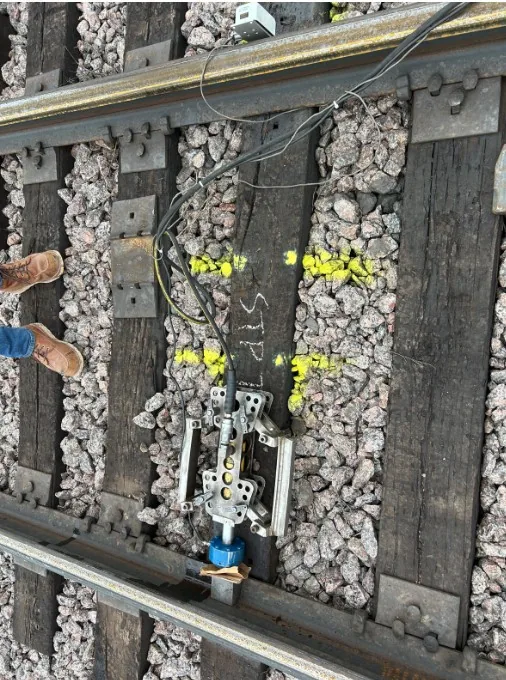
Looking down at a wooden tie on ballast, marked with yellow paint, with a steel test fixture against its end and sensor wires running along the rail
PL 06A single tie push test set up on the track.
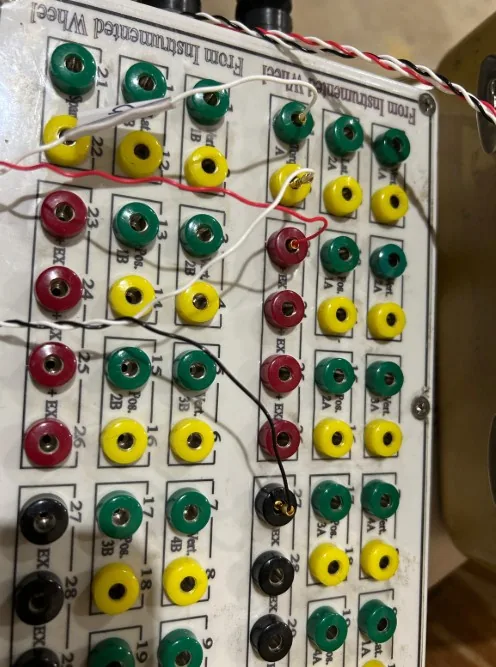
A white panel of numbered red, green, yellow and black jacks labelled from instrumented wheel, with a few jumper wires plugged in
PL 07The patch panel for IWS calibration.
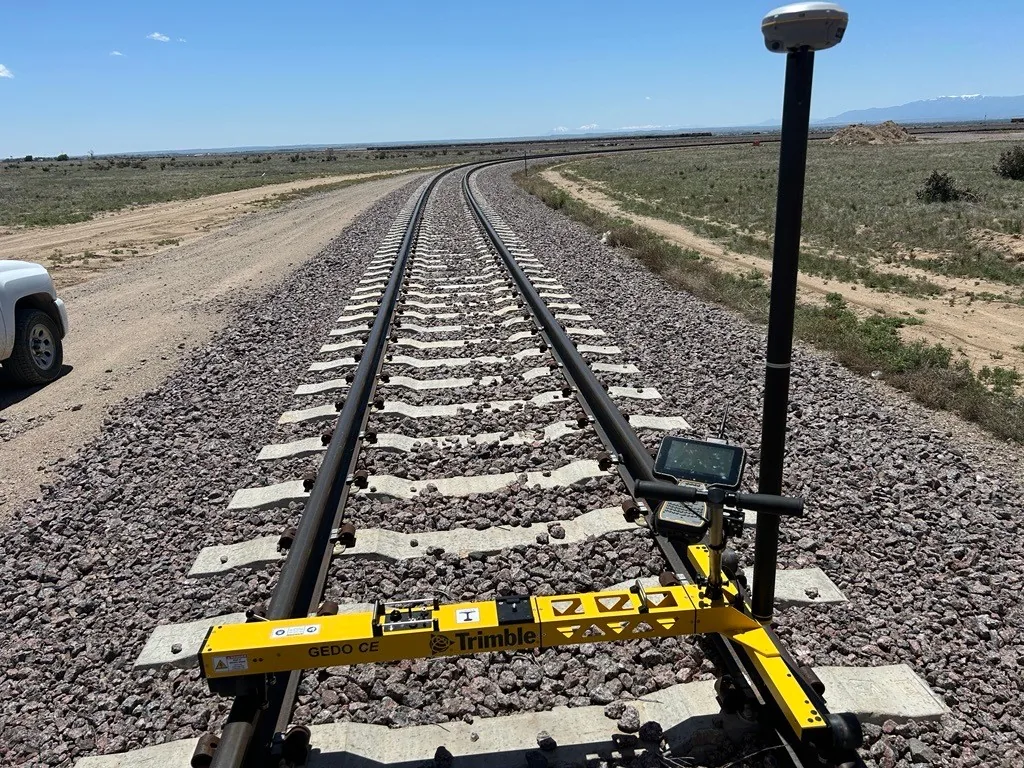
A yellow Trimble measuring cart with a GPS antenna on a mast, sitting across both rails of a curving track in open scrubland
PL 08Measuring the track with a Trimble cart.
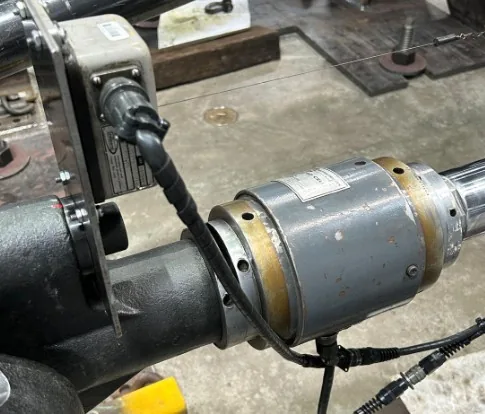
A grey cylindrical sensor around a black shaft, with a black cable running from it to a connector on a mounting plate
PL 09Sensor cabling for the NSC truck test.
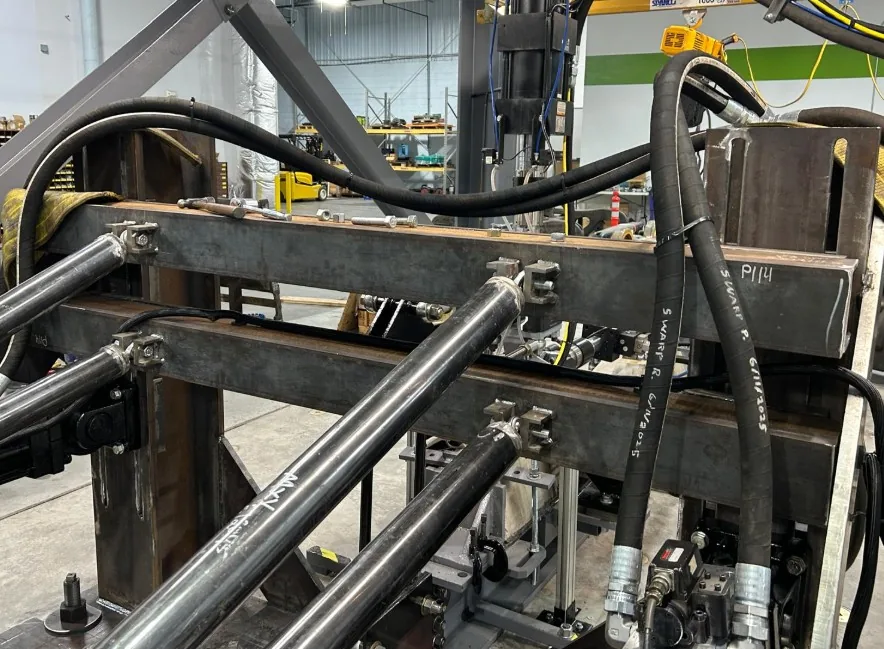
Black hydraulic hoses routed over a welded steel frame with angled struts inside a test hall
PL 10Hydraulic hoses for the NSC truck test.
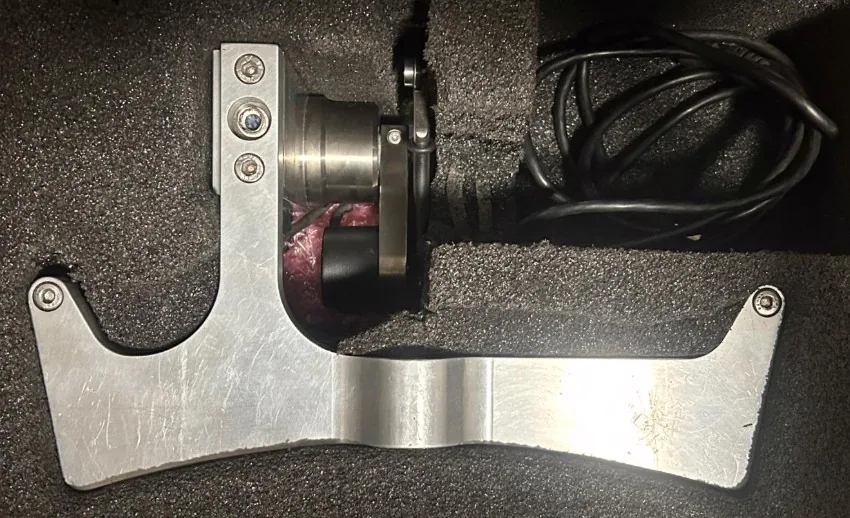
A machined aluminum bracket bolted to a round sensor head with its cable coiled beside it, in a black foam case
PL 11The original Mini Prof attachment I reverse engineered.
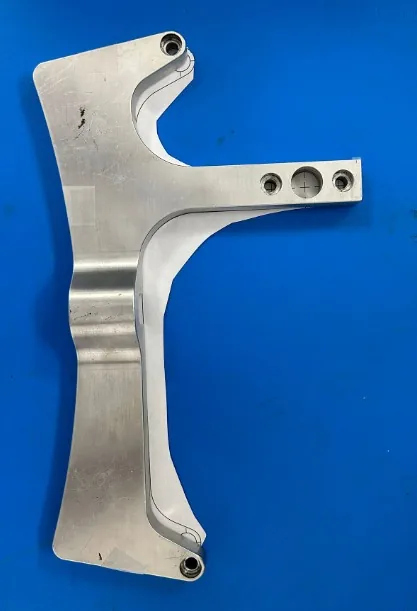
A machined aluminum bracket with mounting holes, laid flat on a blue background
PL 12My first iteration of the Mini Prof attachment.
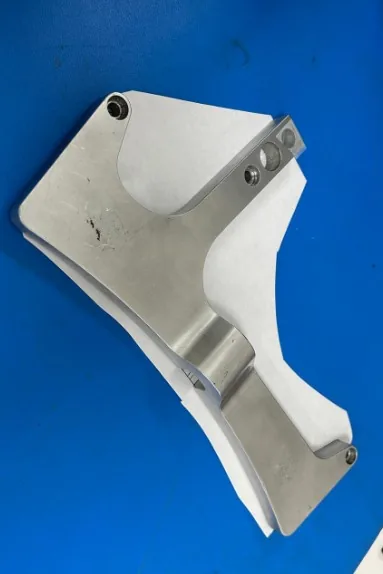
A differently shaped machined aluminum bracket on a blue background
PL 13My second iteration of the Mini Prof attachment.
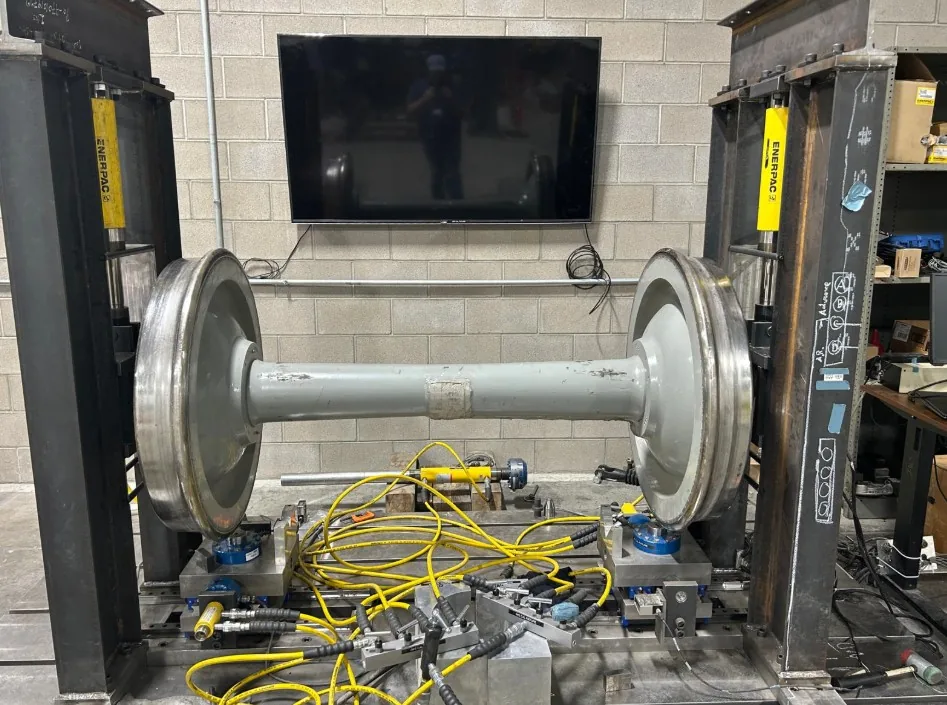
A railway wheelset, two steel wheels on a grey axle, held between two steel columns with yellow hydraulic cylinders, with yellow hydraulic hoses across the base
PL 14The IWS calibration rig. I worked on its hydraulic cable management.
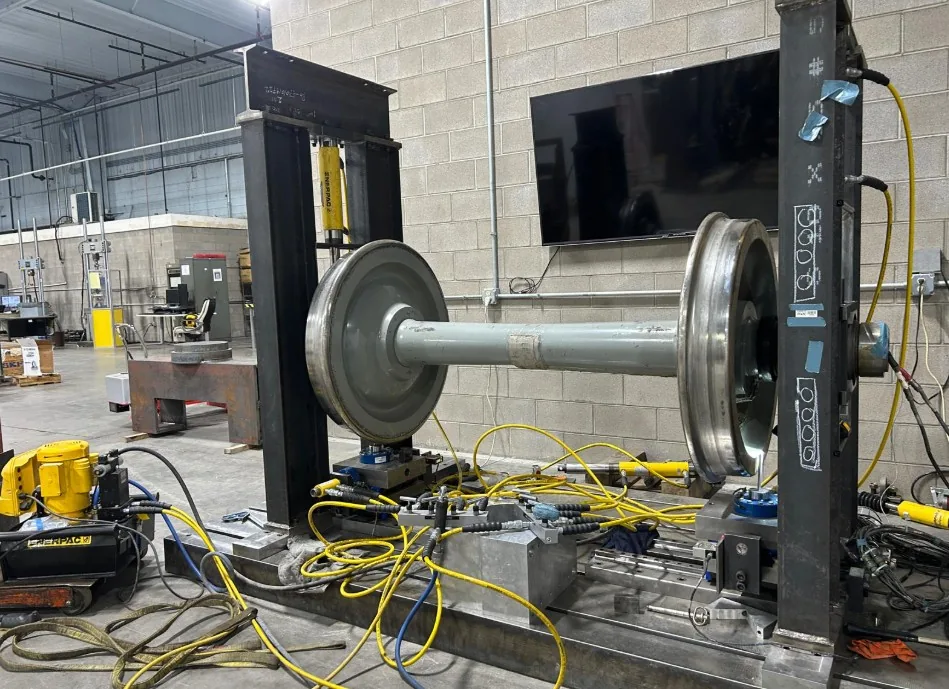
The wheelset rig seen from the front left, with a yellow hydraulic pump and yellow hoses on the shop floor beside it
PL 15The same rig from an angle, with the hydraulic pump on the floor.
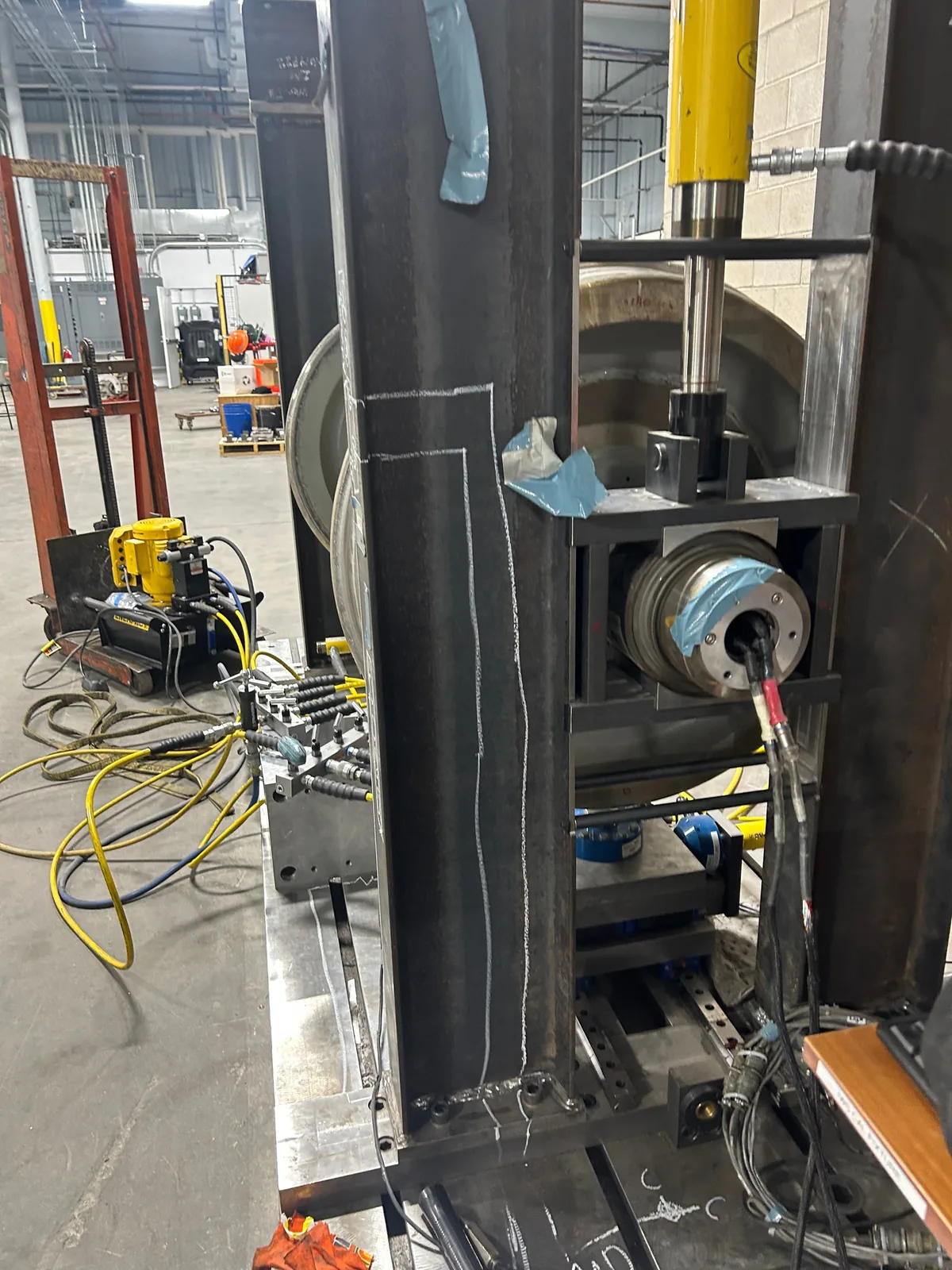
A steel column with chalk marks next to a yellow hydraulic cylinder pressing on a steel box around the axle end, with a hydraulic pump and manifold on the floor to the left
PL 16Looking down the side of the rig at the cylinder over the axle end.

Sheet 03 of 03/Takeaways

What I took away

I learned that you can only trust a measurement as much as the weakest part of the chain that made it, from the sensor mount all the way to the number on the final plot.