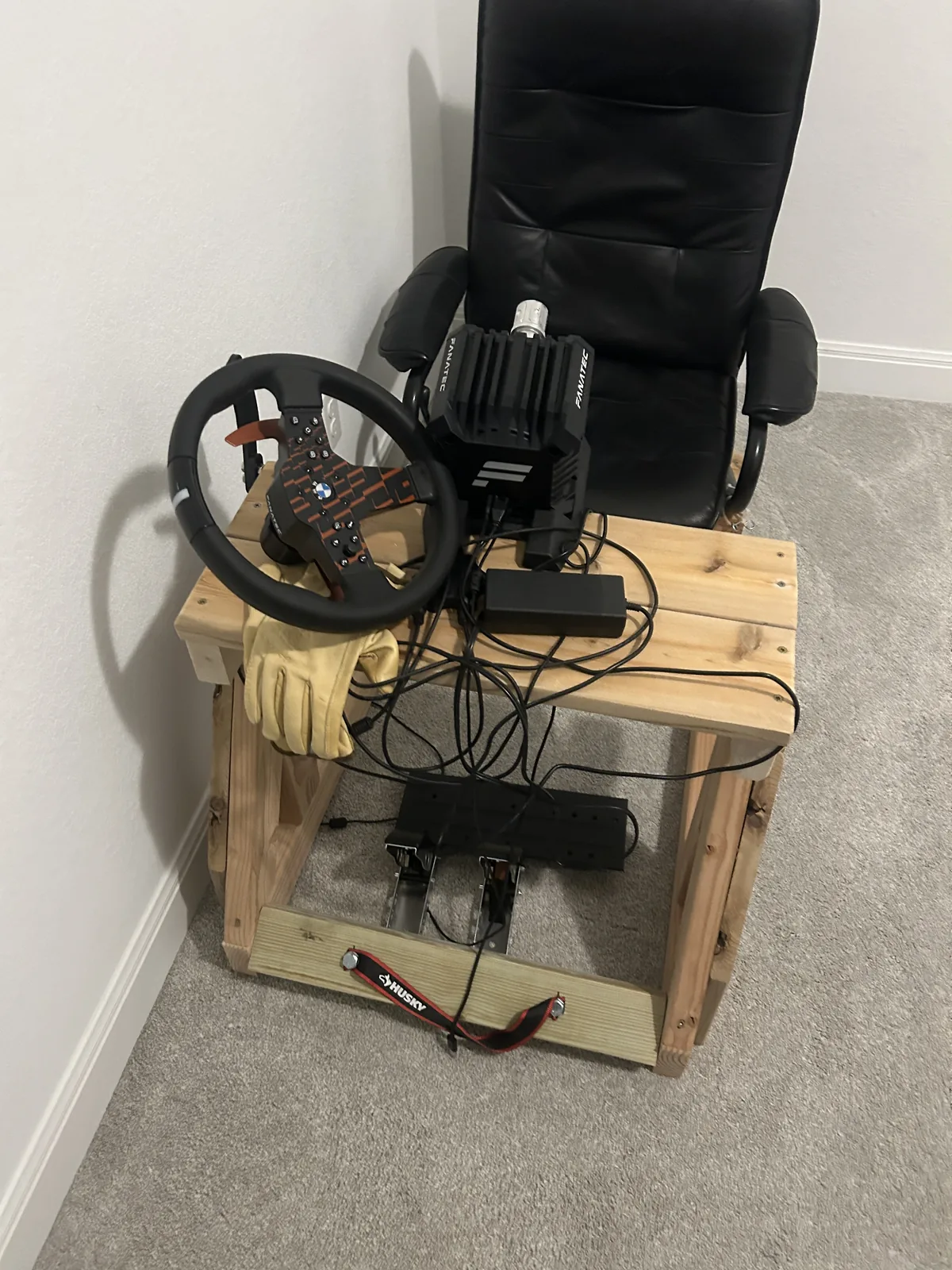
The one that is still assembled, which does not use the carbon seat and is better for it.
Specification / as recorded
Status
Seat and rig built, August 2023
Role
Solo. Plug, mold, layup, frame and assembly
Method
Plywood buck, carved foam, clay plug, hand laid forged carbon
Timeline
Plywood box to demolded shell in eight days
Shop
A home garage, hand tools and an open mold
Sheet 02 of 03/Second rig
The one I actually use
The carbon seat is the interesting object on this page. It is not the thing I sit in.
What I sit in is a second rig, built later, and it does not use the shell at all. The seat on it is a padded reclining chair on its own pedestal, bolted through the floor pan. That is worth saying plainly rather than leaving it to be noticed: I laid up a forged carbon seat, and then built the rig I actually use around a cushioned chair instead, because a rigid shell with no give in it is exactly as unforgiving over an hour as that description suggests. The shell was the better exercise. The chair is the better seat.
PlatePL-01
TitleSecond rig, from the side
ViewDetail
Wider base, a real seat, and pedals far enough out to sit at a proper driving angle.
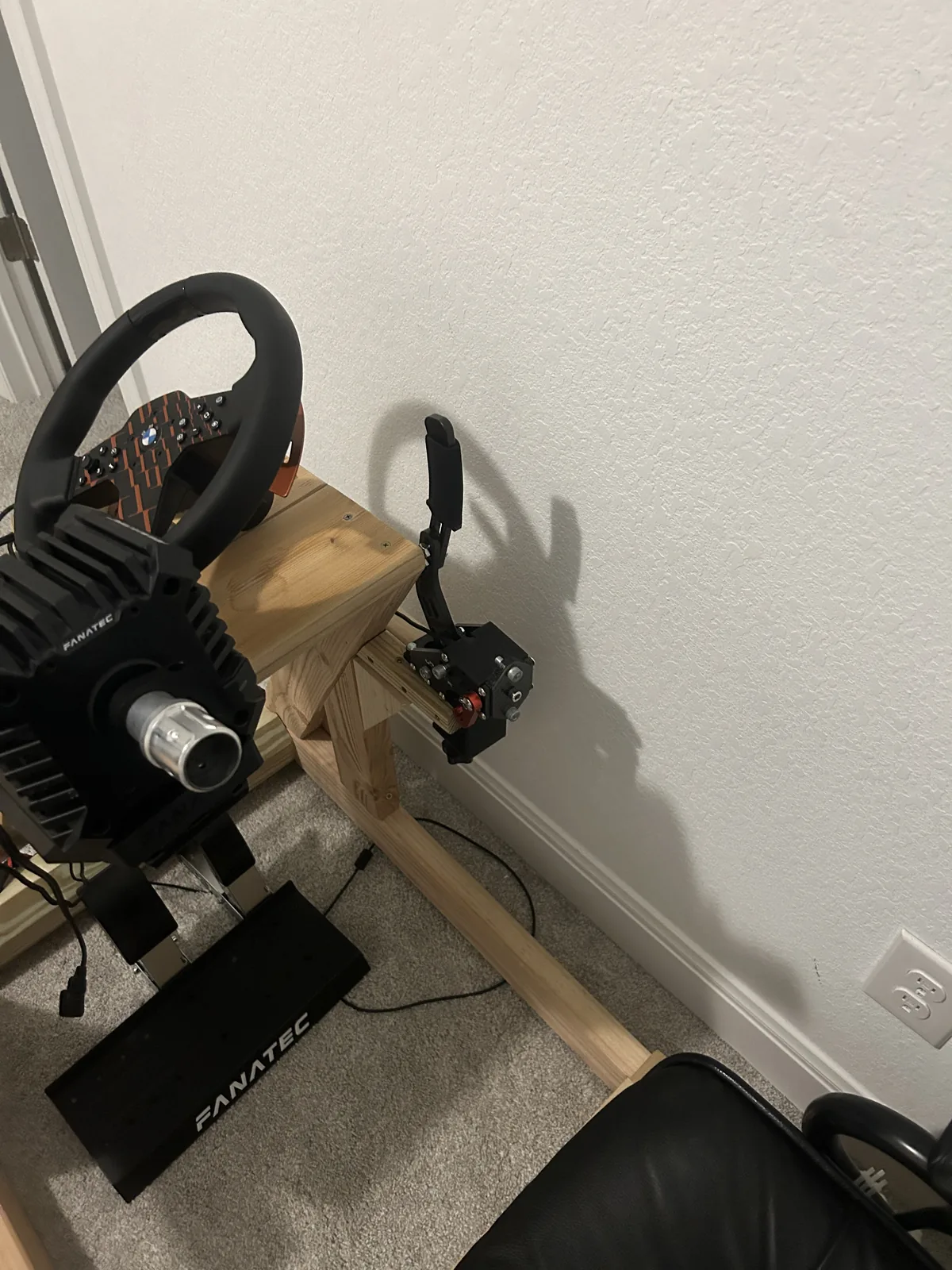
PlatePL-02
TitleWheel deck up close
ViewDetail
The base is bolted through the timber rather than clamped to the edge of a desk.
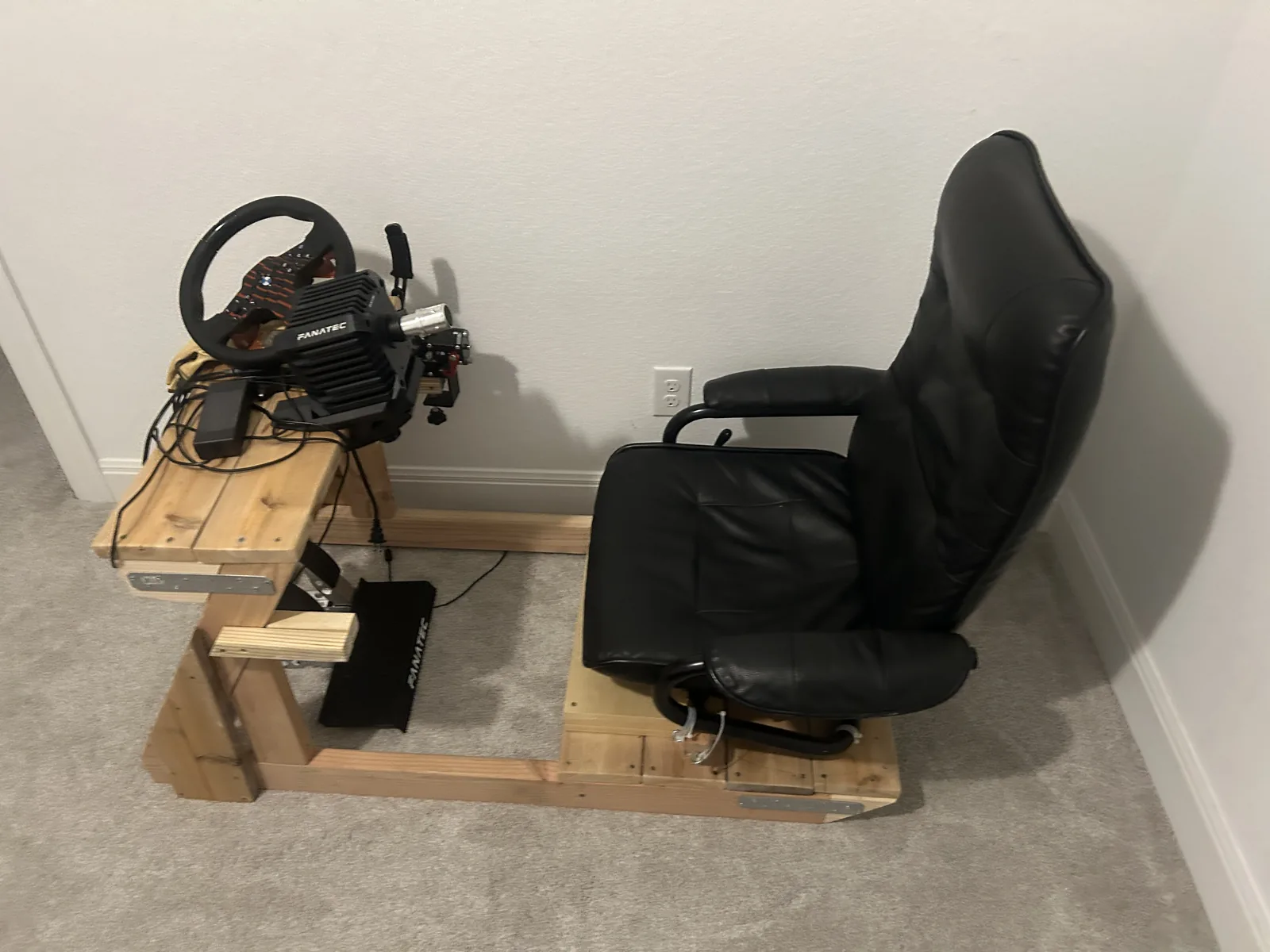
PlatePL-03
TitleSeat, base and pedals in line
ViewDetail
This is the version I still use, which is the only endorsement that counts.
Nothing about the second rig is precious. It is dimensional pine, screws and steel mending plates, with no mold anywhere in its history. It is also the version that is still assembled and still gets used, which is the only endorsement that counts.
Sheet 03 of 03/What changed
Three corrections, all geometry
Every difference between the two rigs is about where things sit, not what they are made of.
The base is a floor pan, not a frame. The first rig carried the load in a narrow timber structure. The second spreads it across a wide pan that everything bolts through, so braking loads go into the floor instead of trying to rack the frame.
The wheel deck is raised and separate. The direct drive base is bolted through its own timber crossmember rather than clamped to the edge of a surface. A clamp is a hinge with extra steps, and a direct drive base will find that out for you.
The pedals moved forward. On the first rig they sat close, which is comfortable for about ten minutes and wrong for anything longer. On the second there is enough distance to actually extend a leg into the brake.
None of that needed carbon, a mold or eight days. It needed a tape measure and a willingness to admit the first geometry was wrong.