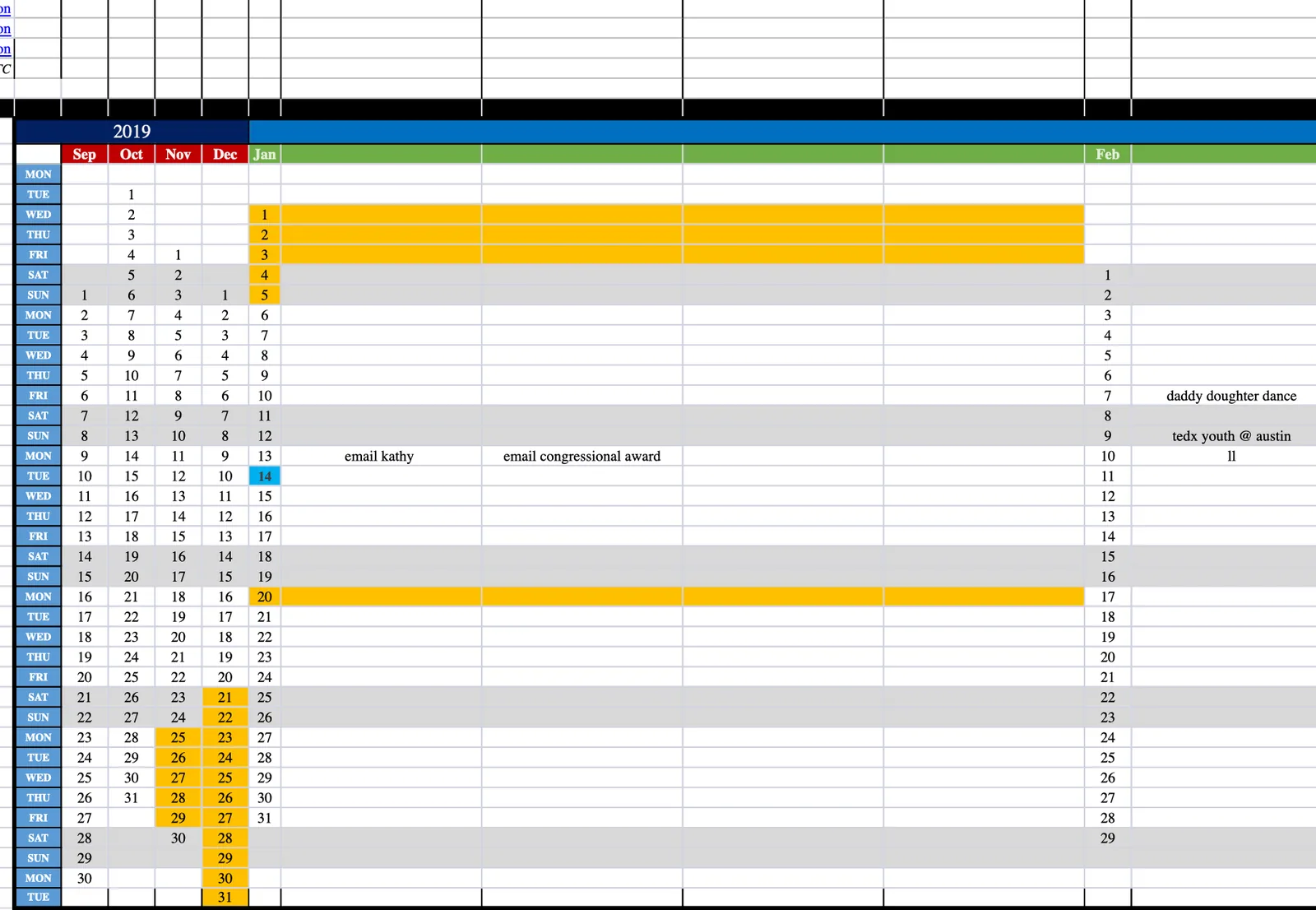
The second workbook, twenty universities deep, and the reason it should never have been a second workbook.
Specification / as recorded
Status
Built and used, 2019 to 2021, last version 10.0
Role
Designed it, maintained it, ran the plan off it
Size
Two workbooks, 40 sheets, about 300 formulas, plus macros
Span
A plan running from eighth grade to twelfth, 2020 to 2025
Built in
Excel, no code beyond what the spreadsheet gives you
Sheet 02 of 03/Tracker
What the second workbook held
The second workbook is only about college applications. Twenty universities, each with the school and the college inside it, the deadline, whether it is public or private, up to three majors applied to, the fee, and an estimated cost per year after aid. Behind that sit a finance sheet, a payments sheet, a contacts sheet, a reading list, a sheet on how degree structures differ between countries, and a checklist that walks the whole sequence from transcript fees through recommendation thank you notes to the deposit.
The point of it was to make the cost visible next to the deadline. Twenty applications is not twenty decisions, it is one decision made twenty times, and the number that should drive it is the easiest thing to lose in the excitement.
Two of its sheets are not shown anywhere on this page and will not be. One holds real admissions outcomes. The other holds per school costs against them. Both are about specific people, and some of those people are not me.
PlatePL-01
TitleApplication year in the companion workbook
ViewDetail
With deadline blocks in orange and the small errands that actually move an application written in the margin.
Sheet 03 of 03/Two files
Why this should never have been a second file
Open the two workbooks side by side and the mistake is measurable rather than a matter of taste.
The plan is a model: 18 sheets, 287 formula cells, and VBA macros behind them.
The tracker is a filing cabinet: 22 sheets, 34 formula cells, no code at all.
Almost nothing in the second file computes. It records. And once I had made it a separate file, the same deadlines lived in two places with nothing tying them together, so keeping them in step was a thing I had to remember to do. I did not remember. The whole point of the first workbook was that a plan you have to remember to update is a plan you stop updating, and I built the second one anyway.
The half worth keeping is the comparison sheet, because it is the one view where a deadline, a fee and a cost per year sit on the same row. That is a column in the first workbook, not a workbook.