Personal systems projectSoloDrawing 15 of 33
Argus
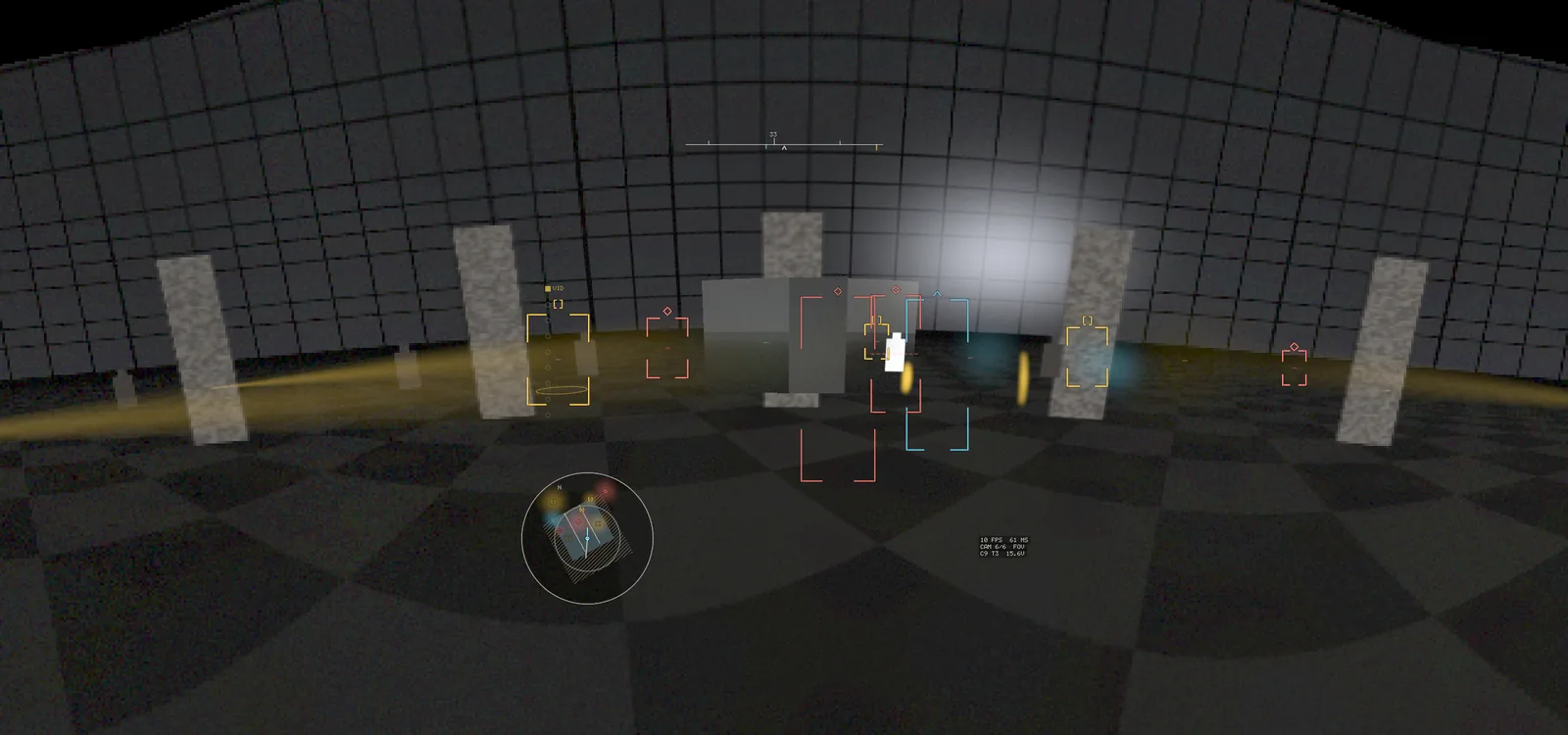
Argus is a helmet I'm building for airsoft that's supposed to show you people through walls, stitched together from cameras, a thermal camera, and whatever your teammates and the robot dog spot. It's about 129,000 lines of C++ so far, and none of it has ever touched a real sensor.
- StatusIn development, 2026
- WrittenAbout 129,000 lines of hand-written C++17 across 15 subsystems
- Desktop tests105 run, 105 pass, on a laptop with no sensor attached
- Not run on hardwareZero lines. Every performance figure below is a budget
- OwnedThe helmet display. Everything else is still unbought
- TargetJetson Orin Nano 8GB worn on the body, Raspberry Pi 5 on the robot
Sheet 02 of 09/System
One helmet, and everything it has to agree about
Argus is named for the hundred eyed giant who kept some eyes open while the rest slept, and that is basically the point of the project: a bunch of independent ways of noticing a person, all agreeing on one picture, on the same clock, in the same frame budget.

Sheet 03 of 09/Parts
Issued as separate drawings
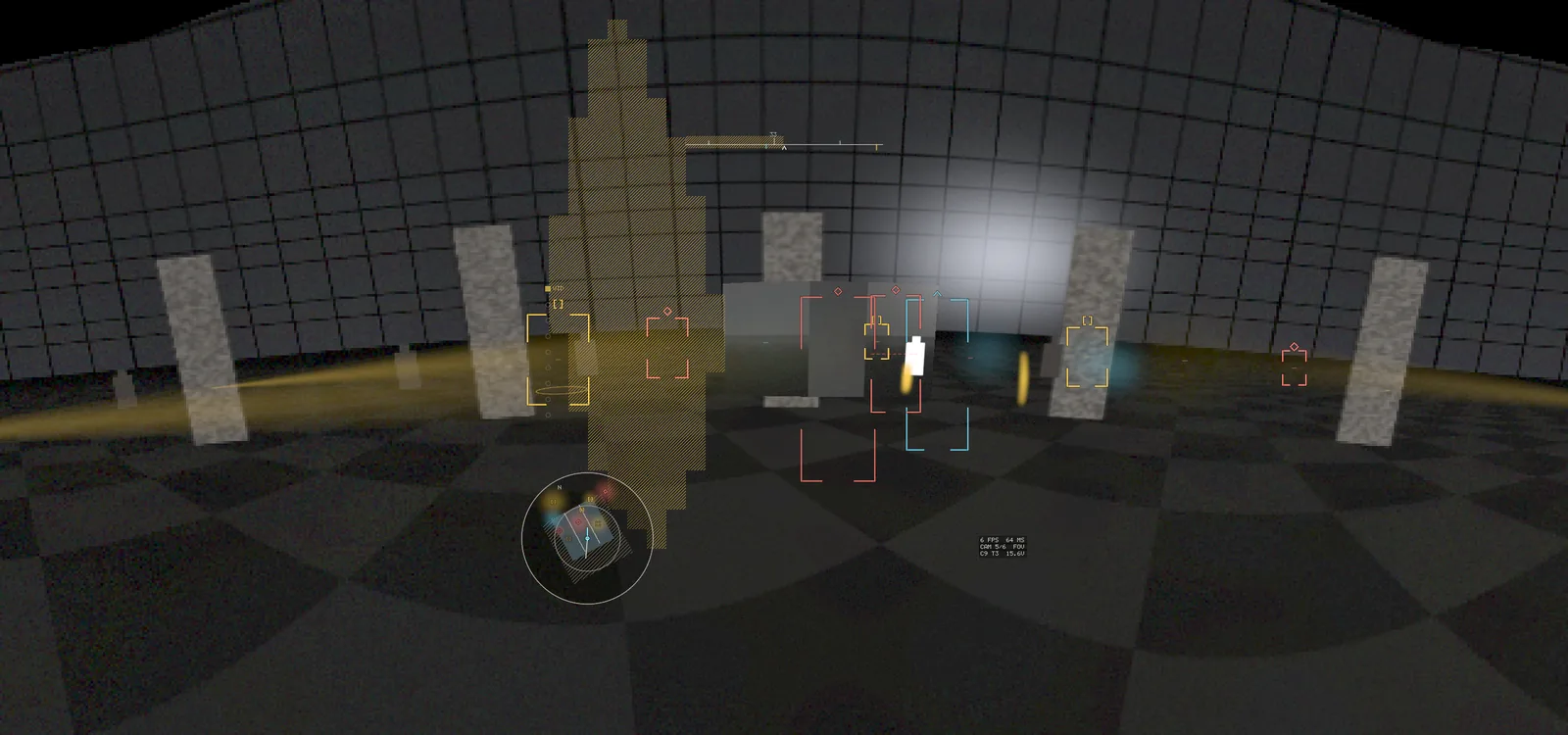
This project is more than one project. Each part below is its own set, with its own sections and pictures.
Part 01 / 03
Video pipeline
Photons to display: the exposure solve, the stitch, late reprojection, and the forty five milliseconds all of it has to fit inside.
Part 02 / 03
Finding people
Four ways to find a person through a wall, where the gun is pointing in the dark, and a map that refuses to freeze a person into a wall.
Part 03 / 03
Runtime and safety
Nine processes with one writer each, twenty four calibrations, and the one document that is not open to optimisation.
Sheet 04 of 09/Status
Written, and verified on hardware
The thing I actually track is the gap between written and verified on hardware, and right now that second column is completely empty.
Sheet 05 of 09/Order
Software first, hardware second
I am writing all the software before I buy any of the real hardware, because the hardware is the expensive part and I want the architecture proven before the money is spent.
Sheet 06 of 09/Simulator
The simulator has to be able to prove me wrong
Every subsystem gets a synthetic test harness that is built to be visibly wrong when the code is wrong, not just a stub that returns something plausible and tells you nothing.
Sheet 07 of 09/Hardware
What it costs, and what I actually own
A full rig, thermal core included, runs about $4,800 to $6,100, and so far the only thing I have actually bought is the helmet display.
Sheet 08 of 09/What next
What I expect to be wrong
The next step is boring: buy the first real parts and find out how much of this survives contact with actual hardware.